
A healthy workplace is an environment where employees feel psychologically, physically, and socially safe, supported by strong leadership, effective risk management, and access to wellbeing services like EAP. Employees work together to build an ecosystem that protects and promotes physical, mental, social, and emotional wellbeing. Healthy workplaces require a blend of psychosocial risk management and EAP support to effectively safeguard mental health in the workplace. So, the question is: how healthy is your organisation?
In modern workplaces, employees expect environments where physical and mental safety matter, where they can access EAP support, and where organisations are underpinned by supportive leadership. It’s not easy, but it’s something all organisations should strive for. Above all, a workplace should be psychologically, psychosocially, and physically safe for all. Let’s explore what makes a healthy workplace and the steps organisations can take to build healthier working environments.
What to expect: How to build a healthy workplace
What is a healthy workplace?
A healthy workplace is one where employees feel safe, supported, and valued -physically and mentally. It combines strong leadership, positive culture, and proactive wellbeing practices to help people perform and thrive.
How do you achieve a healthy workplace?
You achieve a healthy workplace by identifying and managing psychosocial risks, promoting open communication, supporting work-life balance, and investing in leadership and wellbeing initiatives.
How can EAP support your mission in creating a mentally healthy workplace?
EAP supports your workplace by providing confidential, expert care that helps employees manage challenges early, improve wellbeing, and maintain performance - while strengthening culture and reducing risk.
What is a healthy workplace and why does it matter?
A healthy workplace is one where colleagues in every stage of the company hierarchy work collectively to protect and promote the mental health, physical safety, and sustainability of all employees. But why does a healthy workplace matter? According to a Corporate Mental Health Alliance 2025 survey, recent data shows that negative workplace environments are increasing:
Negative workplaces experience:
- 38% of employees experience mental health issues (such as mental load) – a 16% increase on 2022
- 32% of employees experience negative changes at work – a 10% increase on 2022
- 28% experience negative emotional aspects (such as colleague interactions), as well as little recognition or reward
Positive workplaces experience:
- 68% said a positive workplace is where colleagues support one another
- 61% said positive work cultures embrace flexible working arrangements
- 60% said support from a manager is critical for a positive workplace
Building a healthy workplace matters to prevent productivity loss, personal injury, absenteeism, and other adverse factors that can impact the organisation’s operations. Equally, employers have a legal and moral obligation to ensure their employees are safe. Therefore, a healthy workplace goes above and beyond to help their employees thrive, positively affecting their bottom line.
What to consider when exploring how mentally healthy your workplace is?
To achieve a positive, healthy workplace, employers promote mental health and take strides to minimise physical and psychosocial risk. Healthy Workplaces SA say workplaces must consider the following when trying to build a healthy workplace:
- How safe is the employee’s physical workplace
- How safe is the employees’ personal life? Can your organisations do more to support your employees (think EAP)?
- How psychosocially safe the working environment is (think culture)?
- Do you engage with your working community? How are employees, their family and the community around them supported?
Take our healthy workplace quiz below to test your knowledge on what makes a workplace healthy!
Healthy Workplaces Quiz
Select which answer you think is right.
Which of the following best describes a healthy workplace?
What is a psychosocial hazard?
What is the purpose of a psychosocial risk assessment?
How can EAP support a healthier workplace?
Which action is most likely to help build a healthier, more supportive workplace?
Psychosocial safety vs psychological safety: what is the difference?
Psychosocial safety and psychological safety may seem very similar. However, they do have key distinct differences. In simple terms, psychosocial safety focuses on organisational systems and risks, while psychological safety focuses on whether individuals feel safe to speak up within a team.
Let’s explore the definitions in more depth.
Psychosocial safety
Psychosocial safety is an organisation’s responsibility. It involves identifying and minimising hazards and risks that could negatively impact employee mental health and wellbeing. This includes factors such as systems, policies, and job design.
Psychological safety
Psychological safety relates to interpersonal relationships and team dynamics. It reflects whether employees feel safe to speak up without fear of judgement or punishment, and whether conflict or behaviours within teams impact their sense of safety.
Both terms are highly important. However, one is more structural, organisation-oriented (psychosocial safety), and the other is more team-based climate (psychological safety). Let’s detail the key differences:

- Scope: Psychosocial safety takes a whole-of-organisation view, covering systems like job design, leadership, and workplace culture. Psychological safety sits at the team level, focusing on how individuals interact and relate to one another.
- Focus: Psychosocial safety is centred on reducing harm and managing workplace risks. Psychological safety is about fostering an environment where people feel comfortable contributing ideas and taking interpersonal risks.
- Definition: Psychosocial safety refers to how work is structured to protect employee wellbeing. Psychological safety is the shared belief within a team that it’s safe to speak up, ask questions, or make mistakes without fear of negative consequences.
- Examples: Psychosocial safety might involve addressing excessive workloads or preventing bullying and harassment. Psychological safety shows up when team members feel confident raising concerns, sharing ideas, or acknowledging errors openly.
What are psychosocial hazards and risks in the workplace?
Psychosocial hazards are workplace factors - such as high workloads, poor support, or conflict - that can negatively impact mental health, wellbeing, and safety. Federal and state governments have placed strong emphasis on legislating psychosocial safety and holding organisations to account. There are 14 psychosocial risks outlined by SafeWork Australia:
Common psychosocial hazards
- Job demands
- Low job control
- Poor support
- Lack of role clarity
- Poor organisational change management
- Inadequate reward and recognition
- Poor organisational justice
- Traumatic events or material
- Remote or isolated work
- Poor physical environment
- Violence and aggression
- Bullying
- Harassment
- Conflict or poor workplace relationships and interactions
Psychosocial hazards can cause





Why employers cannot ignore psychosocial safety
Negative outcomes if employers dismiss psychosocial safety can entail financial, reputational, and legal repercussions. For example, fines, negative public image, distrust, compliance breaches, reduced ability to attract talent and increased liability exposure.
As such, organisations must implement safeguards to mitigate psychosocial risks and prevent ongoing exposure. One way to do this is via a psychosocial risk assessment…
How a psychosocial risk assessment improves workplace wellbeing
A psychosocial risk assessment is a structured process used to identify workplace factors that may impact mental health, evaluate the level of risk they pose, and implement practical controls to reduce or eliminate harm.
With serious mental health claims increasing by 36.9%, according to SafeWork, this can have a severe impact on an organisation. Equally, time away from work, such as sick and mental health days, was four times higher for poor wellbeing than that of physical injuries.
If these statistics aren’t eye-opening enough, WorkSafe ACT outlines that nationally, mental stress was the fourth largest serious workers’ compensation claim. Similarly, the median time spent away from work due to mental stress was 27 weeks. Absenteeism, as well as presenteeism (when employees are disengaged at work) costs the Australian economy an estimated $6.3 billion annually.
So how do you identify, assess and control psychosocial hazards? Through a psychosocial risk assessment. This is an essential tool for developing a healthier workplace.

How to conduct a psychosocial risk assessment in 4 steps
A psychosocial risk assessment helps organisations identify workplace hazards, evaluate their impact, and put controls in place to protect employee wellbeing.
Identify hazards
Look for workplace factors that may affect mental health, such as high workloads, low role clarity, poor support, conflict, or bullying.
Assess risks
Consider who may be affected, how severe the risk is, and how often employees are exposed to the hazard.
Implement controls
Introduce practical measures such as workload adjustments, leadership training, policy changes, and support services like EAP.
Review and monitor
Track whether controls are working, gather feedback, and update your approach as workplace conditions change.
By embedding this process into your workplace health and safety strategy, organisations can move from reactive responses to proactive prevention, creating a safer, more supportive environment for their people.
While these steps provide a practical framework, psychosocial risk assessments can be complex and are often best conducted with specialist support. Converge is a leader in psychosocial risk assessments. Book a free consultation with our National Psychosocial Risk Manager today!
The role of EAP counselling in building a healthy workplace
Employee Assistance Programs, more commonly known as EAP, are programs designed to offer confidential, independent, and expert mental health and wellbeing support to employees. EAP is funded by the employer, meaning employees can access support for free.
This is why EAP plays a critical role in building a psychosocially safe and healthy workplace. By providing EAP, you’re enabling employees to access support when they need it most – for any and all wellbeing challenges in their personal and professional life. Here’s how EAP helps employers build healthy workplaces:
- Supporting mental wellbeing: EAPs offer timely, confidential access to professional support, making it easier for employees to seek help and normalising conversations around mental health.
- Stopping issues from escalating: With short-term, practical counselling, EAPs help address personal challenges – whether financial, family-related, or emotional – before they begin to impact work.
- Addressing psychosocial risks: EAP services play a key role in helping organisations manage workplace stressors such as conflict, bullying, and burnout, while supporting compliance with psychosocial safety obligations.
- Strengthening workplace culture: Providing access to an EAP signals a clear commitment to employee wellbeing, which can boost engagement, trust, and overall morale.
- Equipping leaders: Many EAP offerings include manager support, helping leaders navigate sensitive situations, have effective conversations, and manage team dynamics.
- Driving better performance: By tackling underlying issues, EAP counselling can reduce both absenteeism and presenteeism, contributing to a healthier and more productive workforce.
There is often a positive return on investment. For example, reduced absenteeism and presenteeism, and higher engagement and productivity, meaning your employees are less distracted by outside and workplace stressors, and can perform better at work. Confidentiality also means employees can speak up without fear of judgement, and coverage is holistic – support is available for family members and covers every aspect of an employee wellbeing journey. Think finances, career, diet, and more – not just mental health counselling.
Why building a healthy workplace matters
Psychosocial safety, mental wellbeing, and workplace support are not optional extras — they directly affect risk, time away from work, and organisational performance.
EAP Services for a Healthier Workplace: Scalable Support for Your People
For organisations looking to proactively manage psychosocial risk and support their people, EAP is one of the most effective and scalable solutions available. Converge is an industry-leading employee assistance program provider.
”“Converge can make a significant difference within your organisation. We care about the organisations and employees we support, and we have the clinical network and the expertise to back our word.
EAP is essential for business success because EAP has a direct correlation with augmenting employee wellbeing. Thus, supporting your business operations significantly, through reducing absenteeism and presenteeism and enhancing performance and engagement.
That’s why creating a healthy working environment, underpinned by EAP is the way forward.”
Jade NicholsonExecutive Director of Client Partnerships

We’ve been supporting employees since the 1960s and we specialise in holistic care. With 2,000+ clinical experts, face-to-face and virtual capabilities, training and risk management specialisations, nation-wide coverage, and powerful digital tools, we’re the EAP for you. Book a demo today!
Why cultural safety is essential for a truly healthy workplace
Cultural safety is creating an environment where all employees feel valued, supported, respected, and culturally safe, regardless of their culture, identity, and gender. After all, we live in a very diverse country with many different heritages and cultures calling Australia home. Equally, many Australian workers may have a disability or identify as LGBTQIA+. Workplace inclusion is essential, and therefore, cultural safety is just as important. The ABS Workforce Census for 2025 outlined that Australia’s working landscape comprises a range of people, but many are often marginalised. Here is ABS’ data breakdown:
- 48% female
- 12% report ongoing disabilities
- 13% identify as neurodivergent
- 12% identify as LGBTQIA+
- 1% identify as Aboriginal and/or Torres Strait Islander
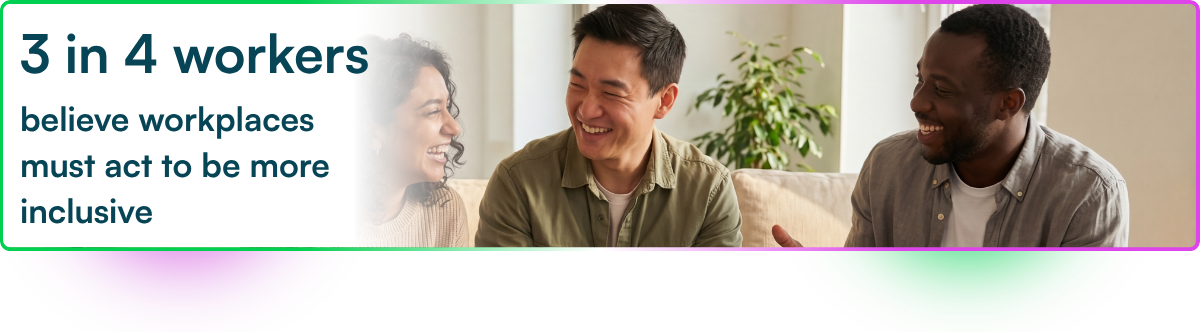
Inclusivity is also significantly important to workers. Diversity Council Australia says 3 out of 4 workers believe workplaces must act to be more inclusive. They are supporting this notion. Therefore, workplaces should be moving beyond tolerance, and instead actively promoting diversity and inclusion.
How mental health impacts physical safety at work
Mental health plays a critical role in physical safety at work. When employees are stressed, fatigued, or mentally unwell, their ability to concentrate, make decisions, and respond to hazards is reduced. This can increase the likelihood of errors, accidents, and injuries – particularly in high-risk environments. Poor mental wellbeing can also lead to slower reaction times and reduced situational awareness, making everyday tasks more dangerous. By supporting mental health, organisations not only improve wellbeing but also create a safer, more alert workforce.
Practical ways to build a healthier, more supportive workplace

Build open communication through frequent ‘check-ins’
Talking with employees should not just take place during annual performance reviews. Checking in should take place frequently. Regular check-ins allow employees to express concerns and challenges – such as workloads, stress, career development, and overall wellbeing. These sessions should be judgement-free, confidential, and provide a safe space to voice concerns.

Model work-life balance and endorse it
To prevent burnout, employers should be actively promoting and modelling work-life balance. CMHAA reports that 46% of the Australian workforce is experiencing burnout. This is a pressing issue. As such, encourage employees to take leave. You could also allow them to follow working patterns that best work for them (working late doesn’t always mean it’s a poor work-life balance, your employee may prefer it). Invest in wellbeing tools such as EAP to help employees find their optimal work-life balance, reduce stress, and prevent burnout.

Be psychologically and psychosocially safe
Build a culture where teams feel supported and valued. Help address toxic team dynamics and decision-making. Work towards building teams who trust one another, collaborate effectively, challenge one another positively, and treat errors as learning opportunities. Conduct a psychosocial risk assessment so you’re able to actively identify, assess and mitigate psychosocial risk.

Invest in leadership training
Employees often take their cues from their leaders. If leaders are not fostering psychosocially and psychologically safe teams, toxicity can fester. Therefore, make sure your leaders are trained, and know how to promote wellbeing. Leadership development is paramount, so invest in their success, thereby, investing in their team’s success.

Show recognition, value employees, and reward their efforts
Actively show your employees recognition – let them know if they’re doing a good job. Reward their talents and innovation to drive higher engagement and job satisfaction. This can lead to employees feeling more valued.

Create shared meaning and social connection
Be clear about the business’s mission and objectives, so they’re able to build meaning around your shared goals and strategies. Establish values that align with your strategy and your people – give them something to strive for. Endorse social connection amongst colleagues through away days and morning teas, for example, so colleagues can learn more about one another and their ways of working.

Invest in programs that promote inclusivity and support
Last but not least, invest in programs that will help you create a healthy workplace. For example, invest in and promote your EAP. Invest in training and development so employees can gain new skills and build their careers. Through partnering with experts, you can reinvent your culture and propel safety practices, so everyone feels safe and comfortable, ready to perform.
Talking with employees should not just take place during annual performance reviews. Checking in should take place frequently. Regular check-ins allow employees to express concerns and challenges – such as workloads, stress, career development, and overall wellbeing. These sessions should be judgement-free, confidential, and provide a safe space to voice concerns.
To prevent burnout, employers should be actively promoting and modelling work-life balance. CMHAA reports that 46% of the Australian workforce is experiencing burnout. This is a pressing issue. As such, encourage employees to take leave. You could also allow them to follow working patterns that best work for them (working late doesn’t always mean it’s a poor work-life balance, your employee may prefer it). Invest in wellbeing tools such as EAP to help employees find their optimal work-life balance, reduce stress, and prevent burnout.
Build a culture where teams feel supported and valued. Help address toxic team dynamics and decision-making. Work towards building teams who trust one another, collaborate effectively, challenge one another positively, and treat errors as learning opportunities. Conduct a psychosocial risk assessment so you’re able to actively identify, assess and mitigate psychosocial risk.
Employees often take their cues from their leaders. If leaders are not fostering psychosocially and psychologically safe teams, toxicity can fester. Therefore, make sure your leaders are trained, and know how to promote wellbeing. Leadership development is paramount, so invest in their success, thereby, investing in their team’s success.
Actively show your employees recognition – let them know if they’re doing a good job. Reward their talents and innovation to drive higher engagement and job satisfaction. This can lead to employees feeling more valued.
Be clear about the business’s mission and objectives, so they’re able to build meaning around your shared goals and strategies. Establish values that align with your strategy and your people – give them something to strive for. Endorse social connection amongst colleagues through away days and morning teas, for example, so colleagues can learn more about one another and their ways of working.
Last but not least, invest in programs that will help you create a healthy workplace. For example, invest in and promote your EAP. Invest in training and development so employees can gain new skills and build their careers. Through partnering with experts, you can reinvent your culture and propel safety practices, so everyone feels safe and comfortable, ready to perform.
Answering your questions on building a healthy workplace
What is a healthy workplace and why is it important?
A healthy workplace can be defined as an environment where employees feel physically, mentally, and psychologically safe, supported by strong leadership and positive culture. It’s important because it reduces absenteeism, improves productivity, and helps organisations meet their legal duty of care.
What are psychosocial risks in the workplace (with examples)?
Psychosocial risks are workplace factors that can harm mental health, such as excessive workloads, poor support, bullying, or lack of role clarity. These hazards can lead to stress, burnout, anxiety, and reduced performance if not properly managed.
Is a psychosocial risk assessment legally required in Australia?
Australian employers have a legal obligation under workplace health and safety laws to identify and manage psychosocial risks. A psychosocial risk assessment helps organisations meet compliance requirements and reduce potential legal, financial, and reputational risks.
What does an Employee Assistance Program (EAP) include?
An EAP typically includes confidential counselling, mental health support, manager assistance, and wellbeing resources. Many programs also offer support for financial, legal, and personal issues – helping employees address challenges before they impact work.
How does poor mental health increase workplace safety risks?
Poor mental health can reduce concentration, slow reaction times, and impair decision-making. This increases the likelihood of mistakes, accidents, and injuries—especially in high-risk environments—making mental wellbeing critical for overall workplace safety.