Organisational Change Management
Prepare your business and employees for when you plan and implement change, with expert support, capability development, transition coaching, and strategy consulting.
- Change strategy development
- Pre and post communication support
- Wellbeing support (including onsite and virtual counselling)
- Change leadership capability development
- Career coaching and other EAP support pathways
5th
Most occurring wellbeing issue in FY25 was workplace change.

#1
Psychosocial risk present in organisations
Converge psychosocial risk data
Did you know: Any organisation, of any size, can access our Change Management Services, so if you’re undergoing change, we’re here to help!
What is Change Management?
Organisational change management is the structured process of planning, communicating and supporting workplace change so employees, leaders and organisations can successfully adapt while minimising disruption, protecting wellbeing and achieving business objectives. Similarly, change management also goes beyond solely supporting employees, the structured process also supports organisations with effectively communicating and successfully implementing organisational change. Change management consulting can also help prevent psychosocial risk and support mental health of those impacted . Effective change management combines communication, leadership, employee wellbeing, training and ongoing support to minimise disruption and improve organisational outcomes.
The technology and tools we provide during times of organisational change
At Converge, we strive to make care as immediate, accessible, flexible, and comfortable during turbulent and distressing times. Equally, we offer the same level of care when employees are proactively attempting to manage their wellbeing. Change can be significantly difficult to navigate, which is why we combine our digital wellbeing technology with our human expertise and care to deliver a successful and effective change management process where staff receive the care they need, and businesses can continue operating with minimal disruption. Here are our three wellbeing tools that underpin our change management processes:
Converge App
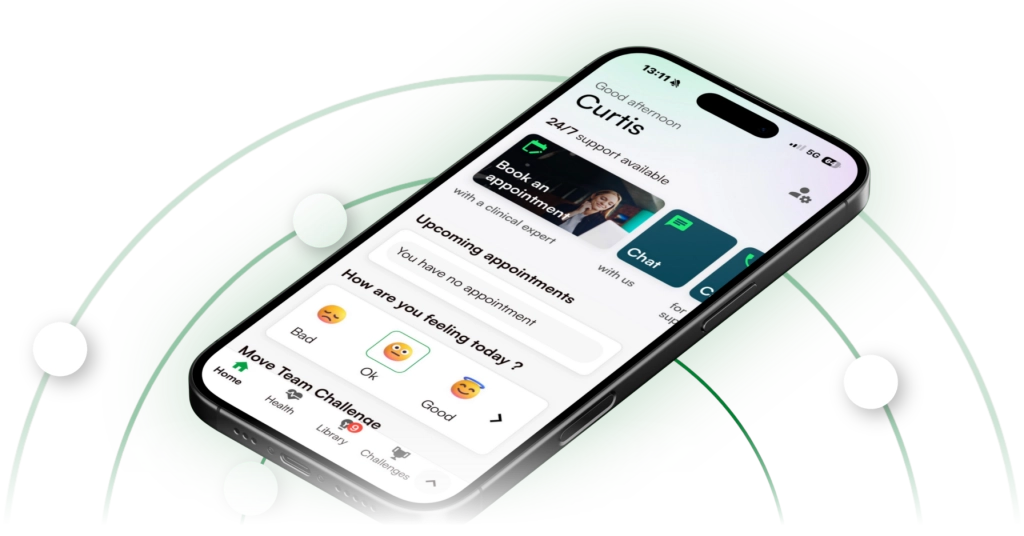
Dedicated insight articles on change management and adapting to change
Mindfulness and wellbeing modules and challenges
24/7 EAP support bookings
Employee Wellbeing Portal
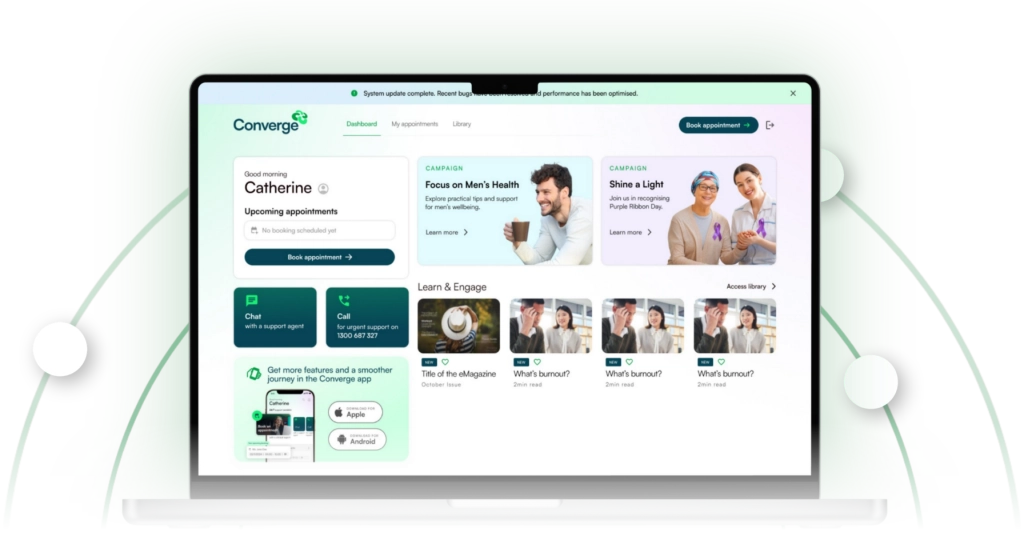
Dedicated tipsheets exploring themes on change
Insights and articles exploring change and adpating to change
Booking and live chat for EAP support
Change Management Portal
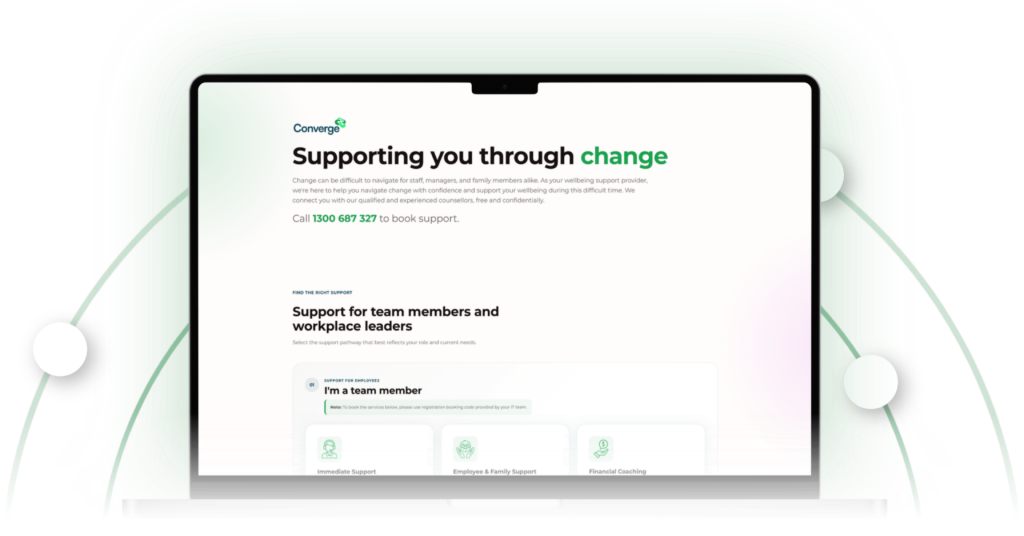
Dedicated resources and guidance for both leaders and staff
Tipsheets and posters exploring change and pathways to support
Proactive support and manager referral guidance
Poorly Managed Change vs Well Managed Change
Successful organisational change isn’t just about implementing new processes or structures; it’s about helping people navigate change with confidence. When change is poorly managed, employees can experience uncertainty, stress and disengagement, which may affect productivity and organisational performance. By contrast, a structured change management approach supports leaders, improves communication and helps employees adapt more successfully. These points are particularly necessary when a company undergoes business, digital, and organisational transformation. The comparison below highlights the difference effective change management can make for both employees and organisations.
| Workplace Outcome | Poorly Managed Change | Well Managed Change |
|---|---|---|
| Communication | Confusion caused by inconsistent messaging and unclear expectations. | Clear, timely communication that helps employees understand what is changing and why. |
| Employee Response | High resistance, uncertainty and disengagement. | Greater engagement through transparency, involvement and support. |
| Employee Wellbeing | Increased stress, anxiety and reduced morale. | Greater confidence, resilience and psychological safety throughout the transition. |
| Business Performance | Reduced productivity, disruption and slower adoption of change. | Business continuity supported through effective planning and leadership. |
| Leadership | Lower trust in leaders and inconsistent decision-making. | Stronger leadership credibility through empathy, communication and visibility. |
| Long-term Outcomes | Higher staff turnover, disengagement and ongoing resistance. | Improved retention, organisational resilience and sustainable change. |
Examples of when Organisations Need Change Management

Mergers, acquisitions, and restructures

Redundancies, digital transformation, and leadership change

Organisational redesign, business transformation, and policy changes

Why Change Management Matters
Change management matters because there is a direct impact on employee mental health and wellbeing. Similarly, organisations who implement a poor change management strategy can see negative outcomes and friction from staff if it’s not properly communicated and managed. What can result from a poor change strategy is employee distrust, absenteeism, low team-morale, disengagement, and reputational damage in the job market.
When a organisational transformation strategy is implemented correctly, it can minimise disruption and lead to successful outcomes. Here is how a good change management strategy can lead to positive outcomes for both employees and organisations:
Positive outcomes for employees
- Less uncertainty
- Better communication
- Reduced stress
- Greater resilience
- Higher engagement

Positive outcomes for organisations
- Higher adoption
- Lower resistance
- Better productivity
- Reduced psychosocial risk
- Stronger leadership confidence
- Improved retention
Change Management Consulting Support for Developmental, Transitional, and Transformational Change
Converge can support organisations through change in a range of different ways: through coaching, EAP support, planned support, onsite and critical incident support, and outplacement support. All these services fit seamlessly into a change strategy and are essential to protecting employee wellbeing during a transition period, especially during business, digital, and organisational transformation. However, the main types of change that we see relate to Developmental, Transitional, and Transformational, all of which offer different complexities that we’re versed in. Here is how we can support with these three different forms of change:
Strategic Developmental Change
- Skill building support (through Career Coaching and training) when job descriptions and responsibilities change
- Support for before and after the change is communicated to employees
- Planned and onsite support for when employees are made redundant as a result of the strategic change
- EAP support for staff who are impacted by guilt after being retained post layoffs
Transitional Change
- Onsite and planned support for post-change communication
- Coaching and guidance for employees impacted by change (career coaching and outplacement support)
- Financial coaching for impacted employees
- Family support for immediate family members who are impacted by an employees redundancy
- EAP support during the transition process
Transformational & Cultural Change
- Managerial and leadership coaching for new and existing leaders
- Conflict support for when there is team friction post change
- Counselling for employees affected by company values shifts
- Coaching and counselling to help employees adapt to new ways of working
Leadership Development Programs for Managing Organisational Change
Leaders are often responsible for implementing organisational change, from the communication of the change process to the consultation period. This can lead to complex people management challenges where leaders must support employees with intricate wellbeing issues, performance concerns, and other work-related challenges. Our data shows that workplace change is the 5th highest reason why employees access EAP support. Gallup data reports that 56% of leaders are also more likely to experience the disruption of change than other employees. However, when a change management strategy is implemented effectively, Gallup said:
- Trust and communication was the highest priority for employees
- When trust and communication is performed well, both scores were higher from employee cohorts
- When leaders are trusted, employees are 4x more likely to be engaged during change
- 62% of employees are less likely to feel burnout when they trust their leaders during change
Psychological Support to Help Employees Navigate Change Confidently
During organisational change management, psychological support for employees is crucial with Flair HR highlight research that shows 43% of employee believes their organisation is unable to handle change effectively – especially when the failure rate of change is as high as 70%. Yet, outcomes have shown that when change is implemented correctly 79% of employees feel positive emotions.
However, when not performed well, what can occur during and after change is a significant impact on an employee’s mental health and wellbeing. Our data also shows the four main reasons behind seeking support during change are:
- Coping with change
- Termination
- Performance improvement
- Change management generally
How Converge Supports Leaders & Employees through Organisational Change Management
With Converge’s change management consulting services, we support organisations, leaders and employees before, during and after organisational change through expert consulting, training, coaching and wellbeing support. We partner with leaders to help them communicate change effectively, navigate difficult conversations and confidently support their teams, while providing guidance on when and how to introduce employees to appropriate support services throughout the change process.
For employees, we provide ongoing wellbeing support through counselling, career and financial coaching, training and development, and outplacement services to help individuals navigate uncertainty, adapt to workplace change, overcome redundancy challenges, manage the complex emotions that can follow, and confidently plan their next career step.
Converge Change Management Services
Change Consultation & Strategy
We work with organisations to understand the nature of their change, their strategy and the potential impact on their people. This involves determining the capability and support needs for employees at different stages of the process, outlining an action plan for supporting their people through the transition and achieving the outcomes of the change.

Leadership & Capability Development
We work with leaders and employees to develop their capability to lead and navigate organisational change. Converge delivers bespoke training, facilitated discussions and coaching programs that target the specific needs of those participating. This has provided skills for leaders to support their teams through change and guided employees towards helpful actions to support themselves and others.
Psychological Support
We provide psychological support to employees impacted by organisational change through the change process. This can involve onsite support during and after organisational change notification meetings and ongoing onsite support for people navigating through challenges associated with change and uncertainty. These services have been shown to alleviate distress and minimise disruption for those impacted.
Outplacement
We work with employees impacted by organisational change that may be seeking opportunities within or outside of their current organisation. This involves working with employees to develop their CV, interview skills, job search strategies, job applications, responding to key selection criteria and much more. We assist employees taking their next career step.
Converge’s 5-Step Change Management Framework
Conducting a successful change management process doesn’t happen all at once. Rather, it typically occurs over several weeks and involves detailed, nuanced steps to ensure all wellbeing factors are met, for example, confident leadership, articulated and unambiguous communications, timely psychological support, and ongoing guidance for staff and leaders, even after the change process has concluded. At Converge, we support you business transformation every step of the way. We offer guidance and support to organisations, leaders, and employees before, during, and after change to ensure psychosocial risk is mitigated. We help your staff navigate change with confidence, all while minimising disruption to your organisation. Here is our 5 step change management framework:
Step 1: Plan for Successful Change
Lay the foundations for a successful transition by developing a clear change strategy, communication plan and support roadmap. This stage prepares leaders and employees for what lies ahead, ensuring wellbeing, leadership and career transition support are integrated from the outset. This includes:
- Less uncertainty
- Better communication
- Reduced stress
- Greater resilience
- Higher engagement
Step 2: Equip Leaders to Lead Through Change
Managers play a critical role during organisational change. This stage builds leadership capability through practical training, coaching and ongoing guidance, helping leaders communicate effectively, support employee wellbeing and confidently navigate change themselves.
- Leadership coaching
- Capability development training
- Ongoing manager support
Step 3: Support Employees During Critical Moments
Change often brings uncertainty, stress and emotional reactions. Providing immediate access to qualified wellbeing professionals helps employees process change, reduces distress and supports psychologically safe workplaces.
- Onsite clinician support
- Virtual psychological support
- Support during notification meetings
- Immediate counselling and wellbeing interventions
Step 4: Sustain Wellbeing Throughout the Transition
Support shouldn’t end once the announcement has been made. Ongoing education, coaching and wellbeing services help employees adapt to new ways of working while maintaining engagement, resilience and productivity.
- Navigating Change and Uncertainty workshops
- Webinars
- Planned onsite wellbeing support
- Ongoing counselling and coaching
- Leadership follow-up support
Step 5: Enable Positive Career Transitions
Where organisational change results in role changes or workforce reductions, career transition services help employees move forward with confidence while protecting employer brand and demonstrating genuine care.
- Career transition workshops
- Career coaching
- Individual outplacement support
- Resume and interview preparation
- Job search and career planning support

8.98/10
Overall training rating for change workshops in 2025
Why Choose Converge for Organisational Change Management?
We recognise the importance of supporting people through organisational change, minimising disruption and employee distress. Our expertise is guiding the people aspects of change across strategic planning, leadership development, psychological support and career outplacement support. At Converge, we support organisational change management and business transformation through:
- Change strategy development
- Leadership support and advice
- Ongoing wellbeing and psychological support
- Individual and team coaching
- Digital wellbeing technology
- National reach – supporting you wherever you are
We identify and deliver to the needs of your people during specific stages of the change process to ease their transition. This often involves working with senior leaders and change managers to plan the right support at the right time, integrating into your overall change strategy. Here are the results and data highlighting the importance and value of change management support:
#1 psychosocial risk is organisational change
100+ organisations support with their change management strategy
50+ transition workshops delivered to leaders and employees
Change Management Consulting Support to Help Your Company Through Change
Change is an inevitability that all employees may have to adapt to and a skill that employees can master. With support from Converge, we can help your employees adapt and succeed during and beyond the change management process. We provide our expert care, delivered by 2,000+ clinicians, organisational psychologists, and coaches, as well as in-person, virtual, and telehealth support, wrapped up in one packages designed to positively influence your change management strategy.
Outplacement Services to Support Employees Through Career Transition
Converge’s outplacement support helps impacted employees who are facing redundancy navigate the job market with confidence. This service is designed to support employees who are being made redundant as a result of change, and is a crucial service to provide because employees impacted by redundancy can face many difficult and complex emotions. Our outplacement support offers:
- Career coaching, development, and planning
- Interview coaching
- Resume development and review
- Job search strategies
- Rebuilding their confidence
Why Organisations Trust Converge for Change Management Support
Organisations trust Converge with their change management consulting needs because we have a proven track record of preparing employees post redundancy, helping them overcome the wellbeing challenges arising from change, and adapt to new ways of working. We’ve delivered 100+ change management programs for organisations of all sizes across Australia. In each change management process, we use evidence-based support methodology and our experienced and qualified consultants understand their challenges, ultimately, helping them regain their confidence and protect their mental health.
Why Change Management Consulting Is Essential for Business Stability
Change management consulting helps businesses thrive during what is a difficult and complex process for a company to undertake. There are the mental health and wellbeing factors to take into consideration while the business evolves to meet it’s new strategy and market position. Through our change management services, we help reduce turbulence by:
- Minimising operational disruption by building structured roadmaps and frameworks
- Helping you reduce employee resistance and friction through stakeholder engagement, coaching and training, and transparency in the communication plan
- Helping employees upskill for accelerated adoption and building confidence in the changes made
- Our consultants can provide objective insights, helping you identify weak spots in your strategy and utilise proven, evidence-based support
Is Change Management Only for Large Organisations?
Organisational change management benefits organisations of all sizes. While large enterprises often engage change management consultants for complex transformations, small and medium-sized organisations also experience significant change through rapid growth, restructures, mergers, acquisitions, leadership transitions, technology implementations and workforce changes.
Regardless of organisation size, employees need clear communication, confident leadership and appropriate wellbeing support to successfully adapt to change. A structured change management approach helps minimise disruption, maintain productivity, reduce psychosocial risks and improve employee engagement throughout the transition.
When Should Organisations Start Planning for Change?
The most effective change management begins before employees are informed that change is taking place. Planning early allows organisations to develop a clear communication strategy, prepare leaders, identify potential risks, establish support services and ensure employees receive consistent messaging from the outset.
Early planning also enables organisations to proactively support employee wellbeing rather than reacting once uncertainty and resistance emerge. By engaging change management support before, during and after organisational change, leaders can help maintain trust, reduce disruption and improve the likelihood of a successful transition.
What Are Examples of Organisational Change?
Organisational change can take many forms, from small operational improvements to large-scale business transformations. Common examples include mergers and acquisitions, restructures, redundancies, leadership changes, organisational redesign, technology implementations, digital transformation projects, policy changes, relocations and periods of rapid business growth.
Each type of change affects employees differently and requires thoughtful planning, communication and ongoing support. Effective organisational change management helps leaders guide their people through uncertainty while maintaining wellbeing, engagement and business performance throughout the transition.
Building trust and creating tailored programs to increase utilisation
Converge provides a broad range of services to the Department’s Public Service employees, as well as support for Reservists and Defence Force Cadets.
Frequently Asked Questions about Change Management
What is organisational change management?
Organisational change management is the structured process of planning, implementing and supporting workplace change to minimise disruption and help employees adapt successfully. Effective change management combines communication, leadership support, employee wellbeing initiatives, coaching and ongoing guidance to improve engagement, reduce resistance and achieve sustainable organisational outcomes.
Why is change management important for organisations?
Change management helps organisations reduce the risks associated with restructuring, mergers, technological change, redundancy programs and organisational transformation. A well-planned change management strategy improves employee engagement, maintains productivity, strengthens leadership confidence, reduces psychosocial risks and increases the likelihood of successful business outcomes.
How does change management support employee wellbeing?
Change can create uncertainty, stress and anxiety for employees. Change management supports wellbeing through clear communication, leadership coaching, Employee Assistance Program (EAP) services, counselling, career coaching, financial coaching, onsite wellbeing support and ongoing psychological support before, during and after organisational change.
What services are included in change management consulting?
Change management consulting typically includes change strategy development, leadership coaching, communication planning, employee wellbeing support, onsite clinicians, virtual counselling, manager guidance, workshops, organisational change communications, career coaching, outplacement services and post-change support to help organisations successfully navigate periods of transition.
What role do leaders play during organisational change?
Leaders play a critical role in communicating change, building trust and supporting employees throughout the transition. Effective leaders provide clear direction, acknowledge employee concerns, encourage open conversations and connect staff with appropriate wellbeing resources such as EAP counselling, coaching and psychological support.
How can an Employee Assistance Program (EAP) support organisational change?
An Employee Assistance Program (EAP) provides confidential counselling, coaching and wellbeing support to employees and leaders during organisational change. EAP services help individuals manage stress, uncertainty and workplace challenges while giving managers expert guidance to confidently support their teams throughout the change process.
What is outplacement support and when is it used?
Outplacement support helps employees affected by redundancy or organisational restructuring transition into new employment. Services may include career coaching, resume development, interview preparation, job search strategies, career planning and emotional wellbeing support to help individuals move confidently into their next opportunity.
What are the risks of poorly managed organisational change?
Poorly managed organisational change can lead to increased stress, reduced employee engagement, lower productivity, higher absenteeism, loss of trust in leadership, increased turnover and greater psychosocial risk. Investing in structured change management helps minimise these risks while supporting both organisational performance and employee wellbeing.
How can organisations reduce psychosocial risks during workplace change?
Organisations can reduce psychosocial risks during workplace change by planning early, communicating transparently, involving leaders, providing regular updates, offering access to EAP counselling, delivering manager coaching, identifying at-risk employees and maintaining ongoing wellbeing support throughout the transition.
What is the change management process?
While every organisation’s approach differs, an effective change management process generally includes:
- Planning the change strategy
- Preparing and equipping leaders
- Communicating with employees
- Providing wellbeing, coaching and psychological support
- Monitoring outcomes and reinforcing the change over time
This structured approach helps employees adapt more confidently while improving organisational resilience and long-term success.