
Understanding Employee Assistance Programs (EAPs)
Clinically Reviewed by Cate Page, Chief Clinical Officer, Converge.
1. What an EAP is designed to do
An Employee Assistance Program provides confidential, short-term counselling and wellbeing support to help employees navigate personal and professional challenges that may impact their work or mental health.
2. Why EAPs matter in the workplace
By offering accessible mental health and wellbeing support, organisations foster a culture of care, reduce psychosocial risks, and empower employees to perform at their best — both at work and at home.
3. The business impact of EAPs
EAPs are an investment in people that pays dividends in performance. They can reduce absenteeism, improve retention, and deliver measurable returns — with studies showing up to a 7:1 ROI.
What is an Employee Assistance Program in Australia?
Employee Assistance Program (EAP) is an organisation-funded mental health and wellbeing program for employees, offering confidential, expert support for a range of mental health and wellbeing challenges, occurring both inside and outside of work. Support for such challenges can include guidance and evidence-based care for stress, burnout, mental health conditions, and general wellbeing concerns.
A company engages a third party to deliver their EAP counselling services to their employees; however, because they are independent of the organisation, EAP providers strictly uphold confidentiality requirements outlined by AHPRA.
It’s also worth noting that EAP services are delivered by expert and experienced clinicians, including psychologists, counsellors, social workers, and specialised consultants. Ultimately, the primary goal of EAP is to support your employees’ mental health and wellbeing. With expert support at their fingertips, they can reduce their chances of experiencing burnout and work-related issues. EAP also underpins employee performance, helping them manage their wellbeing so they can perform at their best.
Types of personal and professional mental health and wellbeing challenges that an employee can access EAP for include:

Stress, anxiety, and depression
Job stress can place significant mental strain on employees, arising from heavy workloads, tight deadlines, and major career changes. Equally, many employees can experience low mood, overwhelm, worry, and anxiety. This can impact their ability to perform at work.

Burnout and performance challenges
When an employee is feeling significantly stressed, fatigued, and mentally and physically exhausted, this can lead to burnout. If an employee is feeling mentally drained, detached from their job, and low in energy, EAP can help employees overcome these challenges through evidence-based support.

Sleep issues and fatigue
When an employee is facing burnout, stress, anxiety, and other mental health conditions – or poor physical health – their sleep can be impacted, leading to further wellbeing challenges and low performance. EAP supports employees with overcoming the challenges that are impacting their sleep so they can get the rest they need.

Grief and loss
When an employee is processing the death of a loved one, which could be a family member, friend, colleague, or pet, they may experience low mood, loss of self-worth, and an inability to compartmentalise their feelings. Similarly, if an employee has undergone a breakup this can also impact their wellbeing. EAP helps employees in this situation effectively navigate their emotional wellbeing, as well as the grief they’ve encountered.

Trauma and crisis intervention
When a staff member has been involved in a traumatic event, or they’re at crisis point, EAP support is an immediate, 24/7 care pathway, designed to provide support promptly following a crisis, critical incident, or distressing event.

Family issues and conflict
When family members are experiencing mental ill-health, or there’s conflict in their personal and professional lives, this can cause significant mental strain. Many EAP providers offer counselling for family members, helping to relieve the mental load placed on the employee. Equally, conflict support can help repair damaged interpersonal relationships.

Life adjustments and planning for retirement
EAP offers essential support for those struggling with parenting (such as new parents, or parents who have concerns about their kids). This may include resources and coping strategies. Equally, EAP can help with relationship struggles, and major life adjustments such as divorce or retirement.

Practical and financial pressures
When an employee encounters a legal issue, struggles with or has been diagnosed as neurodivergent, or is in financial distress, EAP can often support employees facing these challenges, through tailored, targeted, and evidence-based care. For example, EAP can offer Financial Coaching for budgeting and financial awareness/education, or advice on a legal matter or concern.
What is the Cost of EAP Support?
The cost of EAP support depends on the type of package your organisation elects, the amount of support your employees use (utilisation), and whether you decide on a pay-per-employee (PEPA) model or pay-for-what-you-use model. Prices can also vary depending on the size of your workforce, and how complex your structure is and the type of support your workforce needs. While there are many variables, EAP support does have significant ROI attached to the benefits of increased productivity, performance, and engagement. The best way to identify the price of an EAP is to request a quote, an outline of the services available in their plan, and see if they align with the support you require.
We’d love the opportunity to help you explore the EAP support required for your organisation. As one of Australia’s leading and most trusted EAP providers, reach out for a demonstration and we’ll prove our value.
What Wellbeing & Mental Health Challenges Can EAP Support With?
EAP providers are able to support employees with a range of mental health and wellbeing challenges due to their clinical network comprising psychologists, counsellors, and mental health social workers. While we’ve previously explored the types of challenges employees can access, the following list identifies some of the key mental health conditions that many EAP providers can support with:
Mental Health
including Generalised Anxiety Disorder, panic attacks, depression and low mood, seasonal affective patterns, postnatal/perinatal anxiety or depression, and more.
Neurodiversity
including ADHD, ADD, autism, OCD, dyslexia, dyspraxia, dyscalculia, sensory processing, and more.
Substance use and addiction
Addictive behaviours such as gambling, alcohol, and drug dependencies.
Trauma
PTSD, vicarious trauma, acute stress reactions, and other trauma-related challenges.
Ways to access Converge EAP support
Converge makes it simple for employees to reach support, whenever and however suits them. Sessions can be booked 24/7 through the Converge App, the Employee Wellbeing Portal, WhatsApp, live chat, or our contact centre, and delivered face to face, virtually or by telehealth. For a full walkthrough of what happens from first contact through to your session, read our guide on how an EAP works in Australia.
— Use Case
How support is accessed through Converge
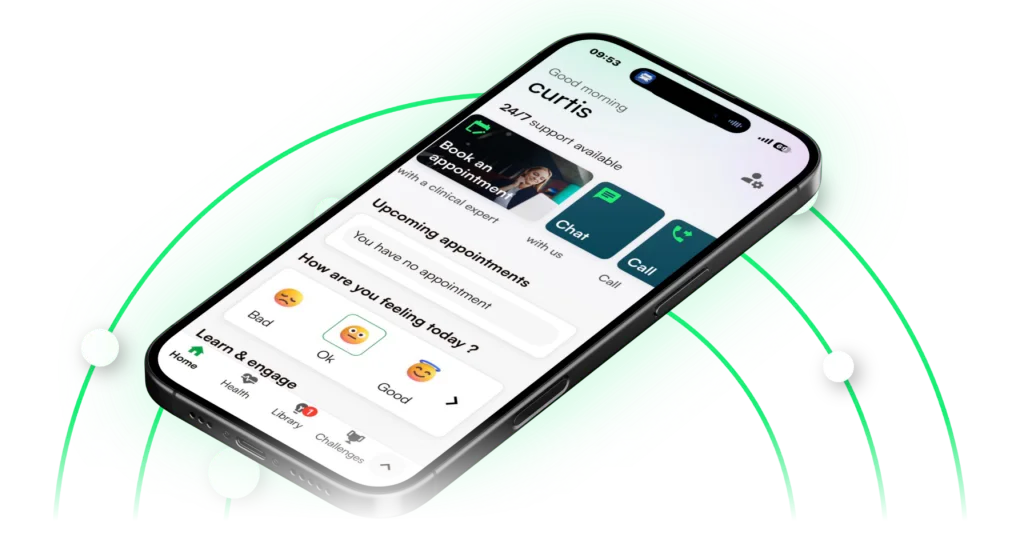
Converge App
→ 24/7 online booking
→ Live chat
→ Click to call
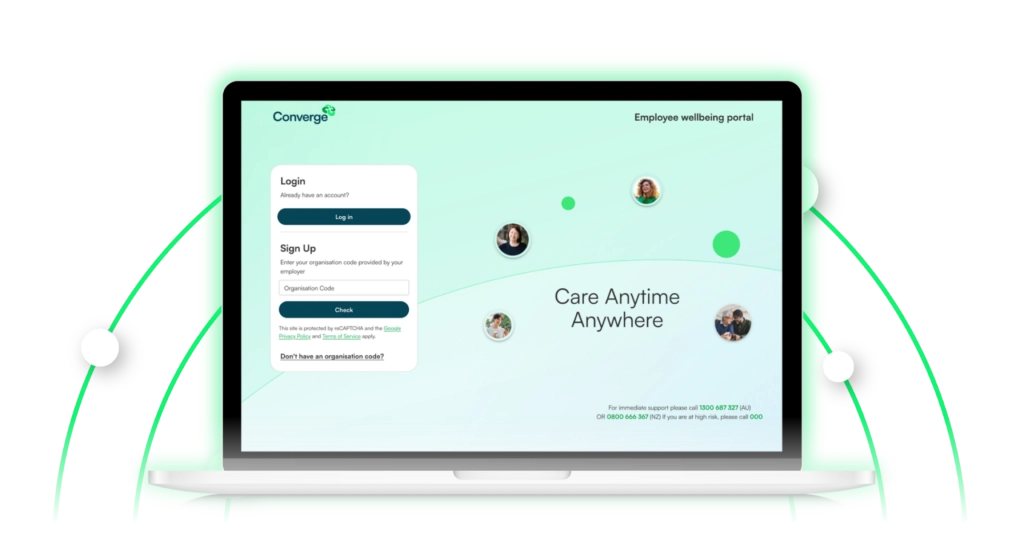
Employee Wellbeing Portal
→ 24/7 online booking
→ Live chat
→ Click to call

→ Talk directly with a Converge Specialist
→ Chat live
→ Book an appointment seamlessly

Contact Centre
→ Dedicated Converge Specialist
→ Book appointments 24/7
→ General enquiries and support
Here’s how counselling and coaching sessions are delivered.
Virtual | Telehealth | Face-to-face
What EAPs Provide
Entirely confidential supportEAPs do not disclose conversations with employees to their employers. The only data shared is anonymised and aggregated — enough to understand workforce wellbeing trends without knowing who participated. |
Expert counsellingMany EAP providers use qualified and experienced professionals. For example, Converge has 2,000 clinical professionals with five to ten years of experience at a minimum: psychologists, counsellors, social workers, dietitians and financial coaches. |
Support for family membersMany challenges impacting staff are family-related. This can lead to mental strain as employees often become the de-facto carer and, of course, can feel excessive worry and anxiety. To support employees in this situation, family members can access EAP (provided that's a service delivered by the EAP - at Converge, we extend counselling to immediate family members to take that burden away). |
A range of issues coveredRelationship challenges, anxiety, depression, stress, burnout or trouble sleeping are all wellbeing challenges an EAP can support with. For example, Converge runs nine dedicated streams covering holistic, reactive and proactive wellbeing. |
Resources that drive utilisationE-magazines, podcasts, webinars, training and consulting products, psychosocial risk assessments, psychometric testing, a wellbeing calendar and wellbeing apps are often tools provided by an EAP to increase preventative mental ill-health measures and wellbeing learning. |
Why EAP Utilisation Drives Business Performance
All in all, EAP utilisation is essential because an EAP is a benefit that keeps your employees engaged, present, and at their best. Therefore, you want EAP utilisation to reap all the benefits available. While many organisations offer an EAP as part of their wellbeing strategy, true impact happens when employees actually use the service.
Encouraging utilisation ensures that employees access early intervention and professional support before issues escalate, reducing absenteeism, presenteeism, and turnover. For organisations, this translates into measurable outcomes: stronger workplace culture, improved productivity, and lower risk related to psychosocial hazards.
Equally, when employees use their EAP proactively, they build resilience, emotional intelligence, and confidence to navigate personal and professional challenges. Ultimately, high utilisation reflects a psychologically safe workplace, one where support is visible, accessible, and normalised at every level.
Therefore, an employee assistance program (EAP) is an employee benefit that should not be overlooked. In fact, our data demonstrates that over 87% of employees love their Converge counselling experience. When you look at the impact of EAP on a business level, there is a proven 7:1 ROI for organisations that embed an EAP program. It’s an investment that makes a considerable impact, not just for your business but for your employees, too.
How to successfully launch an EAP across your workforce
Rolling out an EAP is only the first step. How you introduce it determines whether your people actually use it. A well-planned launch can be the difference between an EAP that sits quietly in the background and one that becomes a trusted, normalised part of your workplace culture. Here’s how to set your EAP up for strong uptake from day one.
Secure leadership buy-in and visible sponsorship
Utilisation starts at the top. When leaders openly support and talk about the EAP, it signals that seeking help is safe and encouraged, not a sign of weakness. Ask your senior leaders to champion the launch and reference it in team meetings, town halls, and internal communications.
Build a clear communications plan
Map out how, when, and where you’ll tell employees about their EAP: intranet articles, email, posters in break rooms, Slack or Teams announcements, and inclusion in onboarding materials. Repetition matters, since one announcement isn’t enough. Plan touchpoints across the first few months, not just launch week.
Host a launch event or webinar
Give employees a chance to hear directly from your EAP provider. A short webinar or in-person session explaining what the EAP covers, how confidentiality works, and how to access support removes uncertainty and builds trust from the outset. Record it for anyone who can’t attend live, and for future onboarding.
Train managers to recognise and refer
Managers are often the first point of contact when an employee is struggling. Equip them with the confidence to notice signs of distress, have supportive conversations, and point employees toward the EAP without overstepping into a counselling role themselves. Manager training also helps dismantle stigma at the team level.
Keep the EAP visible with ongoing promotion
A single launch announcement fades fast. Build EAP awareness into your regular wellbeing calendar. Mental health awareness days, seasonal stress periods (like end of financial year or the holidays), and new starter inductions are all natural moments to remind employees the support is there.
Monitor utilisation and adjust your approach
Track utilisation data (anonymised and aggregated, as EAP providers never disclose individual usage) to understand what’s working. If uptake is low in a particular team or location, that’s a signal to refresh communications or run a targeted session rather than assuming the EAP isn’t needed.
— Compliance
How Does EAP Support with Psychosocial Risk Compliance?
EAP can significantly support with psychosocial risk mitigation as service streams such as employee counselling, manager support, and conflict support, can help reduce psychosocial impact through targeted guidance, advice, and evidence-based support. When organisations do not implement appropriate support, there can be significant financial repercussions, including fines and mental health claims, as well as reputational damage.
However, when an EAP provider is engaged, under Safe Work Australia‘s 14 psychosocial hazards guidance, EAP can provide key support services for challenges including burnout, career direction, and leadership skill building. These services can help prevent ongoing issues which could be linked to poor support, poor organisational change management, traumatic events, remote or isolated work, violence and aggression, and conflict. Here is how EAP can support with psychosocial risk mitigation:
Mental Health Support
When employees experience high job demands, low job control, poor support, lack of role clarity, bullying and harassment, trauma, and conflict, they can experience low mood, disengagement from their job, and drops in productivity and performance. Through mental health support, EAP can help employees navigate the challenges that are causing them stress and anxiety effectively, as well as develop stress and burnout management techniques.
Manager & Leadership Support
Managers play an important role in identifying and responding to psychosocial risks that can affect employee wellbeing and performance. EAP Manager Support provides confidential guidance to help leaders recognise signs of distress, navigate difficult conversations, manage performance concerns, respond to workplace change, and support employees experiencing wellbeing challenges before issues escalate.
Conflict & Relationship Support
Poor workplace relationships, interpersonal conflict, bullying and harassment can contribute to psychosocial risk and negatively affect employee wellbeing and performance. Conflict Support can help employees and managers navigate challenging workplace relationships, develop communication strategies, manage disagreements constructively, and identify practical ways forward before issues escalate.
What are the benefits of offering EAP to employees?
There are many benefits to engaging an EAP such as increasing employee productivity, upholding your compliance and ethical obligations to support employee mental health, and enhancing performance and focus. Below is a breakdown of the benefits of EAP for employees and the benefits for you, an employer.

For employers

When it comes to the benefits for an organisation, we understand the need to see a return on investment and the effectiveness of an EAP in supporting your workforce. Therefore, the benefits of EAP for employers include:
- Your commitment to your employees’ wellbeing, which can help to reduce turnover and increase employee retention.
- An EAP helps reduce absenteeism and presenteeism within your organisation, which can cost Australian businesses $10.9 billion annually.
- EAP can help your employees remain engaged in their work, perform each day, and be productive inside and outside of work.
- EAPs can also ensure your employees are mentally healthy, fit and resilient inside and outside of their work environment.
- Finally, EAPs can help reduce the impact of stress-related illnesses and mental health-related absence from work, which is the leading cause of sickness absence according to the Black Dog Institute.
For employees

Having an EAP means your employees can access essential support when and where they need it. Psychological support is also very costly. So, having an EAP reduces that mental burden as EAPs are often free for employees to use.
Equally, EAPs are also confidential, negating the worry that their conversation with a mental health practitioner is shared with their employer.
The key message here is that EAP benefits your employees by being an expert, confidential, and easily accessible resource they can engage for their mental health and wellbeing, helping them proactively and reactively manage their personal and professional challenges without the weight of cost.
In addition, accessing a counsellor or psychologist for private appointments can take weeks. But what if your employees are in distress? Through EAP, they can get a same-day appointment via EAP – they even can chat with a counsellor at Converge within approximately 20 minutes.
To conclude: via mental health support, you can increase retention, reduce absenteeism and presenteeism, and help your employees thrive.
70%
EAP Impact
70% of surveyed employees showed significant signs of recovery post EAP intervention.
Source: PMC Research Paper
50%+
Benefited from their EAP providers support.
97%
of high-risk employees saw immediate impact after one EAP session.
Converge FY25 Data
67%
Of individuals saw a wellbeing boost after one EAP session – 100% reported significant improvements after two sessions.
Converge FY25 Data
36,000+
Employees accessed EAP counselling support for ongoing stress, anxiety, emotional resilience, depression and other mental health conditions (Employee counselling only).
Converge FY25 Data
Employee Assistance Programs (EAP) Versus Private Psychology
| What matters | Employee Assistance Program (EAP) | Private Psychologist |
|---|---|---|
| Cost to the employee | Free for eligible employees; fully funded by an employer | Out-of-pocket gap fee, even with a Medicare rebate |
| Time to first appointment | Often same-day; if not, appointments are usually available that week. | Commonly several weeks' wait, depending on availability in your area |
| Access to a Mental Health Treatment Plan | Not required. No GP referral needed to start | Required for a Medicare rebate, via a GP appointment first |
| Session limits | Set by an employer's EAP package; typically solution-focused support with referral pathways for ongoing care | Up to 10 individual sessions per calendar year under Medicare's Better Access initiative (subject to current policy) |
| Confidentiality | Fully confidential; employers only receive anonymised, aggregated data, never individual case details | Confidential between practitioner and client, standard clinical practice |
| Who can access support | Employees, and often immediate family members, depending on the EAP provider | Individual client only |
| Access channels | Phone, live chat, telehealth, virtual, in-person and app-based booking | Typically in-person or telehealth, booked directly with the practitioner |
| Scope of support | Broader than counselling alone, and can include financial coaching, career coaching, conflict support, nutrition, legal support and more | Focused on clinical psychological treatment |
Additional Services Provided By EAPs to Further Support Employee Wellbeing
Depending on your EAP, they may offer additional services designed to further support your staff’s wellbeing. This could include financial coaching, career coaching, conflict support, and more – something Converge does provide. Outside of these services, an EAP may also offer training, coaching, and risk management services (such as psychosocial risk assessments, psychometric testing, critical incident support, assessments, and eLearning – to name a few). Again, these are services that Converge provides, and more.
Why are these additional services important? Well, when you engage an EAP, you want to know that your staff can utilise more than just counselling. It’s about holistic wellbeing management. Through coaching, leadership development, risk management and prevention, and in-depth training programs, your employees can shine, progress, and achieve their goals, which, as we all know, align with your company vision. Equally, our services are designed to support at an organisational level, meaning EAPs can, for example, monitor and address psychological risks that could negatively impact your business.
The Return on Investment (ROI) of EAP for Your Business: Key Factors Contributing to EAP ROI
Calculating the ROI of EAP isn’t about the dollars you save or earn; it’s about the performance of your employees. Through EAP, you can mitigate the impact of absenteeism and presenteeism, enabling your employees to perform at their best every day. EAPs are an investment. They’re an investment in your people, and therefore, your business.
PwC estimates that EAP ROI sits anywhere between $2.30 – $4 for every dollar spent. At Converge, we deliver an ROI of 7:1. Outside of monetary ROI, you can also consider the impact of EAP on your organisation’s culture. With the help of an EAP, you can build a more positive, stronger workplace culture, grounded in the foundation that everyone comes to work to thrive and achieve a collective goal.
But what exactly contributes to the ROI of EAP? Let’s break it down:
- Less turnover due to your wellbeing commitment and investment in your people, minimising hiring and new-hire training costs.
- Reduced absenteeism and presenteeism through ongoing mental health support, which, as we know, costs Australian businesses billions each year.
- You may see fewer mental health compensation claims due to EAPs supporting leaders with caring for their teams and supporting employees with overcoming mental health challenges.
- When your employees can effectively manage their mental health, they’re able to focus on work, meaning they may be more productive.
What makes Converge EAP different from other providers?

Over 400,000
Meaningful interactions and support was provided by Converge in FY25
What truly sets Converge apart from other EAP providers is the depth and breadth of our holistic wellbeing model.
With more than 2,000 qualified professionals across Australia, every employee who’s cared for by Converge, receives expert care tailored to their needs — whether that’s counselling, nutrition support, financial coaching, or family assistance.
Our services extend far beyond traditional counselling, integrating proactive wellbeing tools including:
- The Converge App
- Employee Wellbeing Portal
- Service Hub
- Flourish E-Magazine
- Webinars,
- And training programs that continuously engage your workforce.
We also provide comprehensive organisational insights through anonymised reporting, helping leaders understand wellbeing trends and drive measurable impact.
Combined with a proven 7:1 ROI and over 60 years of experience supporting Australian organisations, Converge offers a complete, data-driven approach to employee wellbeing that no other provider can match.
— Case Study
Proven results: destigmatising counselling at AGL
When AGL set out to shift their Health & Wellbeing Program from reactive to proactive, Converge partnered with them to re-launch their EAP, deliver national training on family and domestic violence, and extend support across a highly diverse, multi-site workforce, from call centres to head office. The result: sustained utilisation growth and a return that speaks for itself.
150% — Sustained increase in EAP utilisation since the partnership began
300%+ — Return on investment generated through the destigmatised, proactive EAP strategy
6 months — National family and domestic violence training program delivered across all sites, lifting EAP utilisation in parallel
References
Key Terms Explained
A few terms come up throughout this page. Here’s what they mean.
01
Psychosocial risk
Workplace factors, such as high job demands, poor role clarity, or exposure to trauma, that can negatively affect an employee’s mental health if left unmanaged.
02
Presenteeism
When an employee is physically at work but unable to perform at full capacity due to stress, illness, or poor mental health.
03
Critical incident
A sudden, distressing, or traumatic event, such as a workplace accident, robbery, or death, that can significantly impact the psychological wellbeing of those involved or nearby.
04
Absenteeism
Unplanned time away from work, often driven by stress, burnout, or untreated mental health issues, and typically measured as days lost per employee.
05
Employee Assistance Program (EAP)
An employer-funded service that gives employees, and often their immediate family, confidential access to professional counselling and wellbeing support at no personal cost.
06
Vicarious trauma
The emotional impact experienced by someone who is repeatedly exposed to the traumatic experiences of others, such as through their role supporting colleagues or clients.
07
Utilisation rate
The percentage of eligible employees who access their EAP within a given period, used as a key measure of how effectively the program is being adopted.
08
Return on investment (ROI)
A measure of the value an EAP delivers relative to its cost, often expressed as a ratio, such as 7:1, reflecting savings from reduced absenteeism, turnover, and lost productivity.
Start your EAP journey with Converge
Now you know the power of EAP, why not get in touch? Fill out the form below to contact our team. If you’d like to learn more, hit the links to explore our range of services.
Frequently Asked Questions About Employee Assistance Programs (EAPs)
What is an Employee Assistance Program (EAP)?
An Employee Assistance Program (EAP) is a confidential, employer-funded counselling and wellbeing service that supports employees with personal and professional challenges. Also known as an employee wellbeing program, an EAP provides access to expert counselling and wellbeing services such as stress management, anxiety and depression support, family counselling, and more. An EAP program helps employees maintain mental health, resilience, and performance inside and outside the workplace — all at no cost to them.
What an EAP Provides
EAP services deliver a comprehensive range of support to help employees manage their wellbeing. This includes EAP counselling with psychologists, counsellors, and social workers, as well as additional services such as financial coaching, nutrition support, conflict resolution, and career coaching. A leading employee assistance program like Converge also offers family counselling, wellbeing tools, and proactive engagement through digital resources, ensuring holistic care for every employee.
Key Benefits of an EAP
The benefits of an EAP program extend to both employees and employers. For employees, EAP counselling provides immediate, expert support for mental health, emotional wellbeing, and personal issues — reducing stress and enhancing performance. For organisations, an employee EAP promotes engagement, reduces absenteeism and presenteeism, improves retention, and helps create a psychologically safe workplace culture. The result is a stronger, healthier, and more productive workforce.
Measuring the Impact of EAPs
The impact of an employee assistance program can be measured through utilisation rates, employee feedback, and wellbeing outcomes. High engagement in EAP services indicates a culture where support is accessible and normalised. Employers can also assess reduced absenteeism, improved productivity, and stronger workplace culture as indicators of EAP success. At Converge, utilisation data and anonymised reporting help businesses track wellbeing trends and the effectiveness of their EAP counselling programs.
Key Factors Contributing to EAP ROI
Several key factors drive the return on investment (ROI) of EAP programs. These include high employee utilisation, early intervention, and access to diverse services that address both personal and workplace challenges. Reducing absenteeism, preventing burnout, and lowering mental health-related compensation claims all contribute to measurable ROI. Converge’s comprehensive EAP counselling and wellbeing model delivers a proven 7:1 ROI — demonstrating how strategic wellbeing investment directly benefits both employees and organisations.
Is an EAP the same as seeing a psychologist privately?
No. An EAP is fully funded by your employer at no cost to you, with same-day or near-immediate access and no GP referral required. A private psychologist typically involves a gap fee even with a Medicare rebate, a wait of several weeks, and requires a Mental Health Treatment Plan from your GP to claim a rebate.
How much does an EAP cost?
EAP is free for eligible employees, fully funded by their employer. Cost to the employer depends on the package structure, such as a pay-per-employee model or a pay-for-what-you-use model, and varies with workforce size and complexity. The best way to get an accurate figure is to request a quote.
Do I legally need to provide an EAP in Australia?
There’s no direct legal requirement to offer an EAP specifically, but under Work Health and Safety law, employers have a duty to manage psychosocial risks in the workplace. An EAP is one of the most effective ways to meet that obligation, supporting compliance with Safe Work Australia’s psychosocial hazard framework.
Does EAP support conditions like ADHD, PTSD, or substance use?
Yes. EAP counselling covers a wide range of conditions beyond general stress and anxiety, including neurodivergence (ADHD, autism, dyslexia), trauma-related conditions like PTSD and acute stress reactions, and addictive behaviours such as alcohol, drug, and gambling dependencies.
How do I choose the right EAP provider?
Look for a provider with a large clinical network of qualified professionals, multiple access channels (phone, telehealth, live chat, in-person), full confidentiality, a proven ROI, and services that extend beyond counselling into areas like financial coaching, career coaching, and psychosocial risk management.