

Signs and symptoms of burnout in Australia
1. Burnout is more than just stress
Burnout is a state of emotional, physical, and mental exhaustion caused by prolonged stress — affecting motivation, performance, mood, and overall wellbeing.
2. The warning signs show up in multiple areas
Burnout appears through behavioural, emotional, and physical symptoms, including irritability, reduced motivation, withdrawal, sleep issues, fatigue, and declining work quality.
3. Early support can prevent escalation
Both employees and leaders can reduce burnout through boundaries, realistic workloads, wellbeing-focused cultures, and confidential support such as EAP counselling.
The signs & symptoms of burnout: your workplace wellbeing guide
Have you ever felt completely exhausted, overly stressed, and overrun with a lack of motivation? On the other side of the coin, are you a leader whose team isn’t performing as well as they usually do? Is there a sense of tiredness and negativity within the team? This could be the very beginning of burnout or, at the very least, symptoms indicating characteristics of burnout. Irrespective of the number of symptoms, action can help to prevent any adverse effects.
There are some signs and symptoms of burnout you need to look out for – both as a leader and as an employee. Work burnout symptoms can manifest in many different ways, with the outcome often impacting a worker and the wider team. So let’s explore what burnout is, how it affects you and your organisation holistically, and how to overcome burnout at work symptoms. Ultimately, the goal here is to get everyone back to their best and thriving at work.
What is burnout?
Burnout can be defined as simply an all-encompassing state of mental, physical, and emotional exhaustion, which can be hard to shake. Causes and symptoms of burnout can be interconnected between work and personal life, with the symptoms impacting your ability to function at normal levels.
Often, signs and symptoms of burnout will manifest at work and include feeling overwhelmed and inundated with tasks and deadlines that can feel like a distant finish line you can’t reach. These challenges can be hard to resolve, particularly if you already feel overwhelmed.
Before we get into how to address your work burnout symptoms, let’s explore the types of hurdles you may face when hit by the burnout bug.

Signs and symptoms of burnout at work
Indicators of organisational or corporate burnout symptoms may look like a whole realm of issues or challenges. But let’s simplify burnout by exploring three key areas: physical, emotional, and behavioural indicators. Like all mental health conditions, it’s not as binary as you may think. In fact, burnout can be rather complex. You’ll usually encounter a physical response, coupled with behavioural and emotional factors. As such, let’s answer the question: what are burnout symptoms at work and how do they fit within these three categories?
Behavioural burnout responses
When you’re potentially burnt out, your behaviour will most likely change. You may feel more reluctant to be involved in workplace or social activities. You may also find it difficult to remain on task, become more aggravated, find it harder to perform, and/or engage with your normal coping strategies. Here’s what that can look like:
- Withdrawing and becoming more isolated from colleagues, friends and family.
- Procrastinating work tasks and disengaging from hobbies or putting off starting new tasks because you can’t muster up the energy.
- Lower productivity levels, due to reduced concentration and focus, leading to a potential plunge in your performance.
- You may feel easily agitated and engage in conflict and outbursts of anger or annoyance.
- You may also begin using alcohol, food, drugs and other substances as a quick fix and attempt to improve your mood.
Emotional burnout responses
When burnout comes knocking, your mental health can suffer Corporate and professional burnout symptoms can be triggered by your response to increased pressure and stress. When your brain and body are overloaded, it can feel like scrambled eggs: you’re so scrambled that your mind and body are unable to cope.
But how does it start? Burnout can result from lots of contributing factors such as a high-workload, workplace conflict, lower perceived sense of control, unclear expectations, and/or a toxic work culture and a lack of support – to name a few. This is how emotional burnout can manifest:
- You may feel increasingly cynical, detached, or negative about your workplace and/or life.
- Your temper might be short and you become easily irritated or agitated.
- Motivation may feel hard to come by. You may also feel a drop in passion, energy and interest in daily personal and professional activities.
- You may be overcome by feelings of self-doubt and detachment, resulting in distancing yourself and questioning your abilities and skills.
Physical responses to burnout
The two elements we previously covered were on the mental health end of the scale. However, there is also a physical response. Whilst burnout has a detrimental effect on your mental wellbeing, your body can also feel the punch, with some physical signs and symptoms of burnout including:
- Being overrun with tiredness and fatigue – in reality, you may feel completely exhausted and drained, regardless of the amount of sleep or rest you get.
- You might find it difficult to sleep, causing disturbances to your sleep pattern.
- Constant headaches and body aches – this could make you feel that a cold is coming, when in reality, it could be burnout.
- You may also fall ill more frequently due to a compromised immune system. This could look like more colds, flu, etc.
The real cost of burnout – and the impact of support
Burnout isn’t just “a busy season” – it has a measurable impact on people, performance and the wider economy. These numbers highlight why recognising the signs early and offering timely support, including EAP counselling, is so important for employees and leaders.
Microsoft reports that 61% of Australian workers are burnt out, compared with 48% globally – a clear signal that burnout is a critical workplace wellbeing issue.
Burnout is estimated to cost the Australian economy $14 billion annually, underscoring the need for proactive, integrated wellbeing solutions at work.
45% of employees reported their concern was caused directly or indirectly by work, showing how strongly workplace factors contribute to stress and burnout.
With 87% of employees loving their Converge counselling experience – and 67% reporting a wellbeing boost after one session – early EAP access can be a turning point.
Corporate and professional burnout symptoms explained: Common workplace burnout symptoms employees face
According to our data, 24% of workplace concerns were associated with workplace stress. Additionally, work-related incidents accounted for 27% and mental wellbeing accounted for 20% of all workplace concerns. But what’s most alarming is that 45% of employees said their issue was caused either directly or indirectly by work. While these numbers can’t be directly attributed to burnout, professional burnout symptoms can arise off the back of these concerns – placing a significant toll on employee wellbeing.
Here are some of the common work burnout symptoms that employees can encounter:
- Insomnia and issues with sleep
- Lower motivation and issues with productivity
- Cynicism, low mood, depression, and anxiety
- Become more absent (absenteeism)
- Increasingly unengaged in work tasks (presenteeism)
- Detachment from colleagues and lack of self-confidence
- Little concentration and challenges focusing
- Emotional and physical exhaustion
Work Stress Symptoms vs. Burnout: Key Differences
All in all, signs and symptoms of burnout look like prolonged stress, exhaustion, cynicism, negativity, and dissatisfaction, as we’ve already uncovered. However, there is a difference to feeling stressed at work and being burnt out. Recognising when you’re stressed versus when you’re potentially burnt out is important for understanding the type of support you might need.
We can become stressed for a myriad of reasons – tight deadlines or big projects ring a bell? This can actually be a good thing. Calm says stress is your body kicking into gear and reacting to oncoming challenges. You might be asking: “How is this good?” Well, stress can help us focus and give us the drive to meet the challenge head-on and exceed expectations. Yet, while a little stress can be good, inversely, too much stress and stress over long periods of time can be quite the opposite.
Defining Workplace Stress vs Burnout
Work burnout symptoms are usually caused by ongoing and prolonged stress. When stress wears you down, exhaustion can take hold, causing the multiple signs and symptoms of burnout we’ve previously discussed. As ‘Calm’ explains:
”“Burnout… is what can happen after experiencing prolonged stress, especially in situations where you feel overwhelmed and undervalued. It's beyond being busy — it's feeling empty, emotionally drained, and unable to keep up with life's demands.”
Ultimately, you can view the difference between stress and burnout as a glass of water. Imagine your glass being half full – that’s stress. But when the glass is arid and bone dry, that’s burnout. Not even the Duracell bunny can power its way out of burnout. So, what’s the solution? How do you manage burnout at work?

How to Manage Burnout at Work and Prevent Stress with EAP support
With a little help and some self-care strategies, you can minimise the effects of burnout. Let’s split this into three categories: what you can do to mitigate the effects (and chances) of burnout, what organisations can do to reduce the potential for employee burnout, and finding the right support to overcome professional burnout symptoms.
Asking for help is never weak, and there are support systems in place. Take EAP Australia as an example. You can access free and confidential support through your workplace employee assistance program to help you overcome burnout at work symptoms (but we’ll get to that in a moment).
How you can overcome burnout as an employee
- Firstly, set boundaries. Improve your work-life balance by separating work from your personal life. Exercise your right to disconnect afterhours by stepping away from work emails, not taking work calls, and setting yourself timeframes where you can unplug.
- Secondly, take breaks. This could be a nice holiday using your annual leave, or taking mini-breaks away from your laptop, giving yourself time to reset.
- Thirdly, use the word no! It might seem a little foreign to some of us, but saying no can help minimise burnout. Delegate tasks and say no to new responsibilities if your plate is too full.
- Finally, exercise regularly, eat healthily, prioritise getting a good night’s sleep, abstain from unhealthy substances, and practice hobbies that you enjoy (a little self-care and mindfulness).
What Organisations can do to minimise potential burnout
- Build a culture that’s foundationally wellbeing focused. Show your employees that they’re valued and promote open communication to ensure they feel heard and safe speaking up when they’re over capacity.
- Train leaders to know how to mitigate against burnout through communication, re-directing tasks, and showing empathy and support. Preventing burnout is better than trying to beat burnout when symptoms have begun.
- Set reasonable goals and don’t overload your staff’s plate. Realistic workloads and SLAs are paramount. Allow your employees to give their opinion on their job design where possible, and embed clear goals that equate to sustainable workloads.
- Finally, offer support systems such as wellbeing training and stress management tools so staff can proactively manage their wellbeing. Equally, offer an employee assistance program – let’s explore this in more detail.
How to recognise burnout in others
Recognising burnout in someone else can be challenging, but there are clear indicators that often appear before burnout becomes severe. By paying attention to changes in how a colleague behaves, performs, looks, and engages with their work, you can spot early warning signs and offer support before things escalate. Here are four key areas to look out for.

Behaviour changes
Withdrawing from conversations, avoiding collaboration, or becoming unusually irritable or short.

Performance shifts
Missing deadlines, making more mistakes, or struggling to stay focused on tasks.
Physical cues
Visible fatigue, increased sick days, or looking generally run down or unwell.

Drop in work quality
Noticeable decline in standards, reduced engagement, or doing the bare minimum compared to their norm.
The power of EAP in reducing and preventing burnout
Offering integrated employee wellbeing resources can help reduce the cost of burnout and help employees get back to their best. We all care about our workplace and the work we do. But did you know: burnout costs the Aussie economy $14 billion annually, according to Mental Health First Aid. Alarmingly, Microsoft reports that 61% of Aussie workers are burnt out – globally, the rate is 48%. Therefore, providing wellbeing solutions is pivotal, and EAP should be one of the main solutions an organisation offers.
As an employee myself, when I feel stressed and anxious – essentially, burnt out – I access EAP. Through tailored mental health support and effective strategies via confidential counselling, I was able to stamp out my feelings of burn out and get back to my best.
If you can relate to what you’ve read in this article, you should access your workplace EAP to help address your work burnout symptoms. If you take Converge as an example, 87% of employees loved their counselling experience, with 67% saying they felt a boost in their wellbeing after one session.
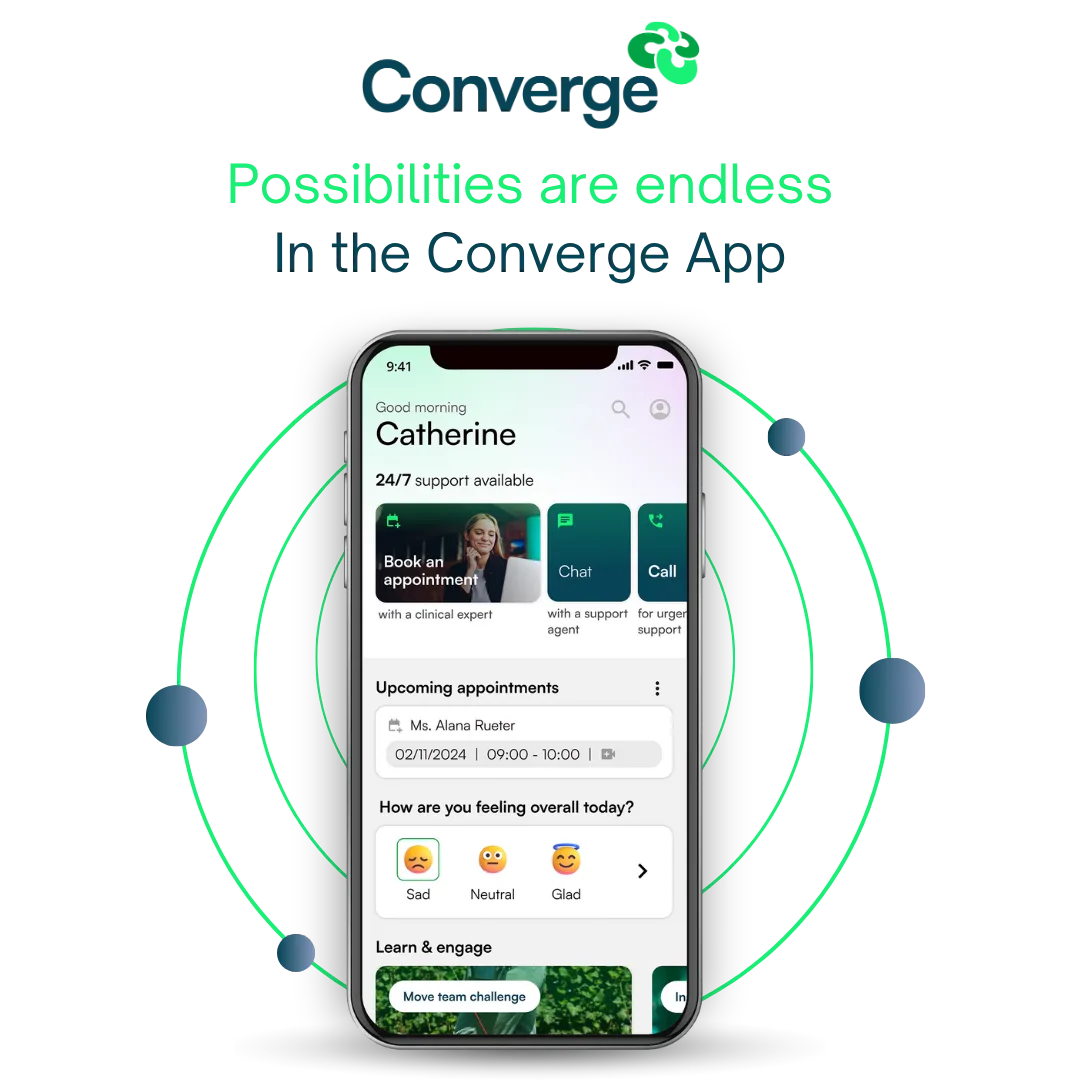
On the other hand, if you’re a leader reading this article, why not consult with Converge to see how our mental health support solutions can help reduce wellbeing challenges (including signs and symptoms of burnout) in your organisation?


Learn more about the signs and symptoms of burnout
What are the early signs and symptoms of burnout at work?
Early signs of burnout may include exhaustion, irritability, reduced motivation, difficulty concentrating, withdrawing from colleagues, and feeling overly stressed or overwhelmed. Physically, burnout can cause headaches, sleep issues and lowered immunity. Emotionally, it may present as cynicism, negativity or self-doubt.
How is burnout different from stress?
Stress is typically short-term and caused by specific pressures or deadlines. Burnout stems from prolonged, unmanaged stress and results in emotional exhaustion, detachment, low motivation, and an inability to cope. Stress can help you focus; burnout leaves you feeling drained and unable to keep up.
What causes burnout in the workplace?
Common workplace drivers include high workloads, lack of role clarity, unrealistic expectations, toxic culture, workplace conflict, and feeling undervalued or unsupported. Personal factors such as poor work-life balance and lack of boundaries also contribute.
What are the common behavioural symptoms of burnout?
Behavioural symptoms may include procrastination, low productivity, withdrawal from social or workplace interactions, conflict or irritability, and increased reliance on unhealthy coping mechanisms such as alcohol or comfort eating.
What emotional symptoms indicate burnout?
Emotional indicators include cynicism, negativity, detachment, short temper, reduced passion or interest in work, and feelings of self-doubt or inadequacy.
What physical symptoms can burnout cause?
Burnout can lead to chronic fatigue, headaches, sleep disturbances, weakened immunity, muscle tension and persistent feelings of exhaustion regardless of rest.
How can employees overcome burnout?
Employees can set boundaries, disconnect after hours, take breaks or annual leave, say no to extra responsibilities when overloaded, maintain healthy habits, and seek confidential counselling through their Employee Assistance Program (EAP).
How does EAP help with burnout?
EAP counsellors provide confidential mental health support, practical coping strategies, stress management tools, and early intervention to help employees recover, build resilience, and return to their best.
When should I seek help for burnout?
If you feel persistently exhausted, overwhelmed, unmotivated, emotionally drained, or notice worsening physical symptoms, it’s important to seek support early. Access your workplace EAP or speak with a leader you trust.