
In most organisations, there’s this thing called EAP. It’s a term we may hear from time to time, but we may not realise how essential it actually is for employee wellbeing and workplace mental health. As a resource, EAP or employee assistance program offers free and confidential mental health support – it’s less elusive than what the opening sentence of this article suggested.
EAP opens employees up to integral wellbeing and employee mental health support avenues, ensuring they’re able to cope with and overcome life’s challenges, as well as thrive to embrace life’s opportunities. However, for an employee, accessing such workplace counselling services may evoke apprehension. Well, we’re here to demolish those walls (picture a bulldozer) and show you why EAP is essential for staff and for an organisation as a whole.
What is EAP? Understanding Employee Assistance Programs & Workplace Mental Health
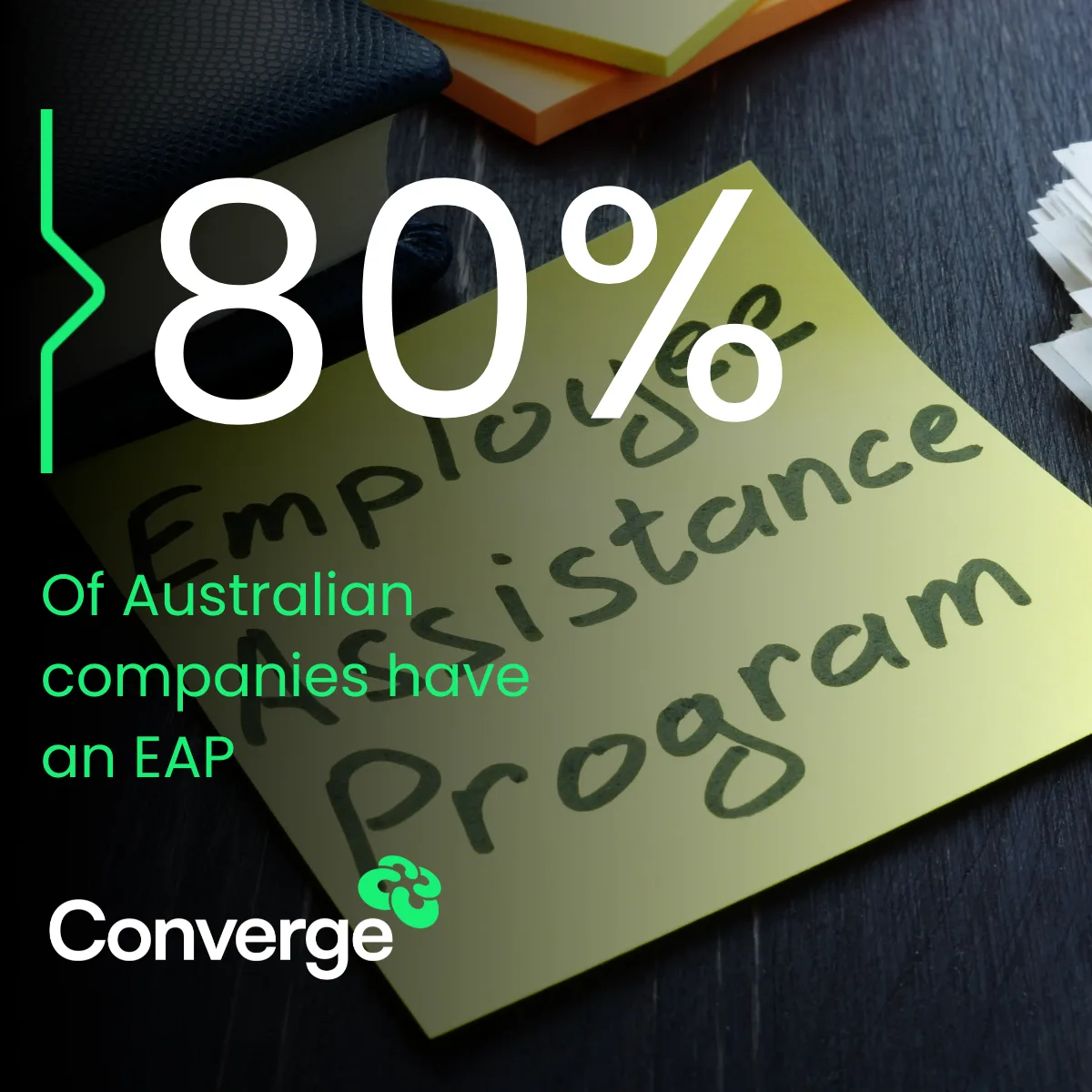
EAP is a widely accessible resource available to many employees. According to IBS, around 80% of Australian companies have an EAP program. But what exactly is an EAP? Well, an employee assistance program is relatively straightforward: it’s a program designed to support employees with their mental health and wellbeing through counselling, coaching, and other workplace wellbeing initiatives.
The workplace is where we spend a significant portion of our time. On average, 90,000 hours of our lives are taken up at work – that’s a lot. If you’re like the gentleman writing this article, you probably spend more time with your colleagues, work laptop and emails than you do with your kids, partner, and family. As such, with all this time consumed by work, it can get stressful, anxiety-provoking, and if you’re predisposed to mental illness, the workplace can sometimes intensify these symptoms. So, what’s the solution? Take it from us, it’s EAP Australia.
”“More employers are becoming aware of the return on investment they receive from EAPs. EAP implementation can improve productivity and lower absenteeism, largely because of the beneficial effects on employee welfare, including supporting emotional wellbeing, morale, motivation and work-life balance.”
IBS World.
To wrap up the messaging here: EAP is a program dedicated to the wellbeing and mental health of employees via short-term therapy and counselling services. At Converge, our EAP program offers mental health support, financial coaching for employees, conflict support, manager support, neurodiversity support, and much more. Shameless plug over!
Why Use an EAP? Benefits for Employee Wellbeing & Mental Health
Life is full of ups and downs. One minute we’re flying high, excelling on a project, revelling in a sporting moment that should be on a highlight reel, or we could be getting married or shipping our first child off to school. The next, there are downs. We could be feeling heightened anxiety, depressed, or hitting setback after setback.
That’s where EAP can offer an essential helping hand. EAP addresses personal and professional issues inside and outside of work. It targets an employee’s overall mental health and wellbeing to help them get back on track as well as continue on the upward track if that’s where you are. In other words, Employee assistance programs can also be a proactive modality of support.
An employee could access their EAP to better handle bumps in the road, gain a competitive edge in their career, and even manage the stress in life that generates the most anxiety – such as finances and nutrition. Many EAP providers in Australia deliver these as part of broader employee counselling services to ensure staff receive holistic care and professional guidance. Take Converge as an example.
According to our own in-house data:
- 66% of EAP cases at Converge were personal-related.
- These included mental wellbeing (53%) and social wellbeing and relationships (30%).
For an organisation, they’d be kidding themselves if they didn’t think personal issues would not bleed into work life. If we’re not doing well in our personal lives, how are we meant to perform in a working environment? Gone are the days of black and white separation between personal and work issues. It was never realistic, and finally, we’re all recognising this.
Outcomes of EAP: Improving Employee Mental Health & Wellbeing
Realistically, seeking psychological support is expensive. In fact, the Black Dog Institute reports that 60% of survey respondents said they couldn’t afford psychological support.
When life gets overwhelming, a solution is available. With EAP, it’s covered by an employer, so for employees, it’s a free resource with the same level of competency and expertise. How? Because, in the case of Converge, all our consultants are counsellors, psychologists, and social workers – to name a few, and all are required to have a high level of skills, experience and specialisation. Again, shameless plug over.
When we crunch the numbers, we find that…
- Based on 150,000 responders, employees who access EAP through Converge are very satisfied with their counselling experience.
- 66% saw significant boosts in their wellbeing after just one session.
What does this mean? Well, that EAP works. Encouragingly, employees can experience positive wellbeing boosts and keep their counselling within EAP, so they may not need to seek expensive psychological support. Regardless of which EAP a company elects to use, there are real, tangible results. But what are the benefits of EAP for an organisation?
Organisational Benefits of EAP: Corporate Mental Health Support & Productivity
Psychosocial risks are present in all workplaces. What sets a company apart can be how it addresses these psychosocial risks, including its offering of an EAP Not to mention, offering support to employees is the right thing to do. 34% of outreach to Converge was related to workplace concerns, which included incidents, work-related stress, workplace change and mental wellbeing.
Turning a blind eye to employee wellbeing can be detrimental to an organisation’s productivity and success. Without corporate mental health support, employees can become disengaged from their work. This can result in absenteeism, presenteeism, and a decrease in productivity.
In the case of absenteeism, a Gallup survey out of the US found that mental health-oriented absences equate to a productivity economic punch of $47.6 billion annually. In Australia, SafeWork reports that psychosocial risks can cost an Aussie employer $6 billion per year. In the same survey, they found that absenteeism and presenteeism in Australia generate an estimated pitfall of $6.3 billion per annum.
A startling fact based on the data we’ve collated is that 45% of employee issues arose from the workplace – or it was a contributing factor. Therefore, offering support to employees could decrease the economic fallout each year created by dips in productivity. Equally, absenteeism and presenteeism can be reduced by EAP programs. Honestly, it’s a no-brainer for organisations: help employees get back to their best = good organisational output = a higher-performing organisation.
How to Access Your EAP: Employee Counselling Services & Support
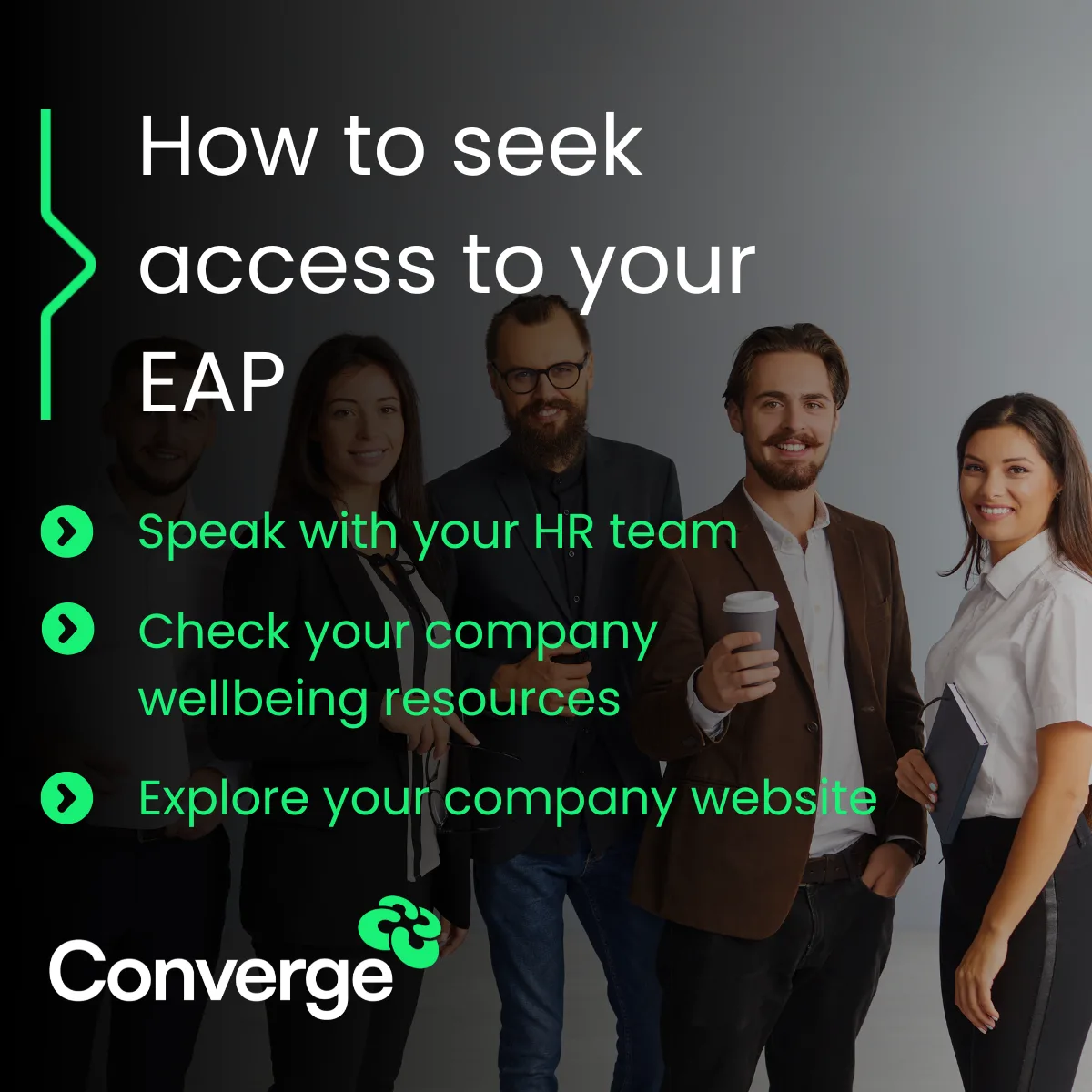
The best place to start is to chat with your HR team or check your company page. This could be the intranet where wellbeing services are stored. In most cases, when using Converge or another EAP, a unique code will be required when booking an appointment. Don’t forget to have it handy. Then all you have to do is book the appointment you’re after, and then you’re off to the races. It’s essential, however, to check how many sessions you’re allocated and what services are available. So, to recap:
- Speak with your HR team to see who your EAP is
- Get their website, phone number or app
- Source your organisation code so you’re able to book an appointment
- Then, access the range of services you have on offer!
If Converge is your EAP, getting in touch with us is easy. Head to our online booking portal at the top of this page, the Converge App, or, in the case of urgency, call 1300 687 327. We’re here for you anytime, anywhere. So, book your appointment now with one of our 2,000 expert consultants and get your mental health and wellbeing back on track.
EAP FAQs: Employee Assistance Programs & Workplace Wellbeing
Before we sign off on this article, we know there might be some questions still on your mind. Whether you’re an employee reading this breathtaking piece of literature, or you’re on an odyssey to onboard a new EAP, or you’re simply on a fact-finding mission, here are some answers to your burning questions…
1. What exactly is an Employee Assistance Program (EAP)?
An EAP is a confidential service that helps employees deal with personal or work-related issues impacting their mental health, wellbeing, both at home and at work. Converge’s EAP provides counselling, coaching, and specialist support to empower people to thrive both at work and at home.
2. Is the EAP really confidential?
Yes. Confidentiality is at the heart of Converge’s EAP. Employers don’t know who uses the service or what is discussed. Only aggregated usage data is shared with workplaces to identify general wellbeing trends, never individual details.
3. What kinds of issues can I use EAP for?
Employees can access EAP for a wide range of concerns, including stress, anxiety, relationship challenges, grief, workplace conflict, financial worries, and more. It’s not just for ‘big problems’ – everyday struggles can be explored with a professional to gain clarity and strategies.
4. How does an EAP benefit employers?
An EAP supports employee wellbeing, which can improve morale, reduce absenteeism, enhance productivity, and demonstrate genuine care for staff. For employers, it’s a proactive way to build a resilient and engaged workforce.
5. How can an employer promote EAP effectively to staff?
To maximise utilisation, communicate regularly about EAP through multiple channels – team meetings, newsletters, onboarding packs, intranet banners, and leadership reminders. Normalise help-seeking by sharing examples of topics employees can discuss and reinforcing confidentiality.
6. How do employees access Converge’s EAP services?
Access is simple and flexible. Employees can call the dedicated EAP phone number, book online via the Converge portal, or use the app to arrange counselling or coaching sessions at times that suit them – including after hours. Check we’re your EAP before trying to book!