
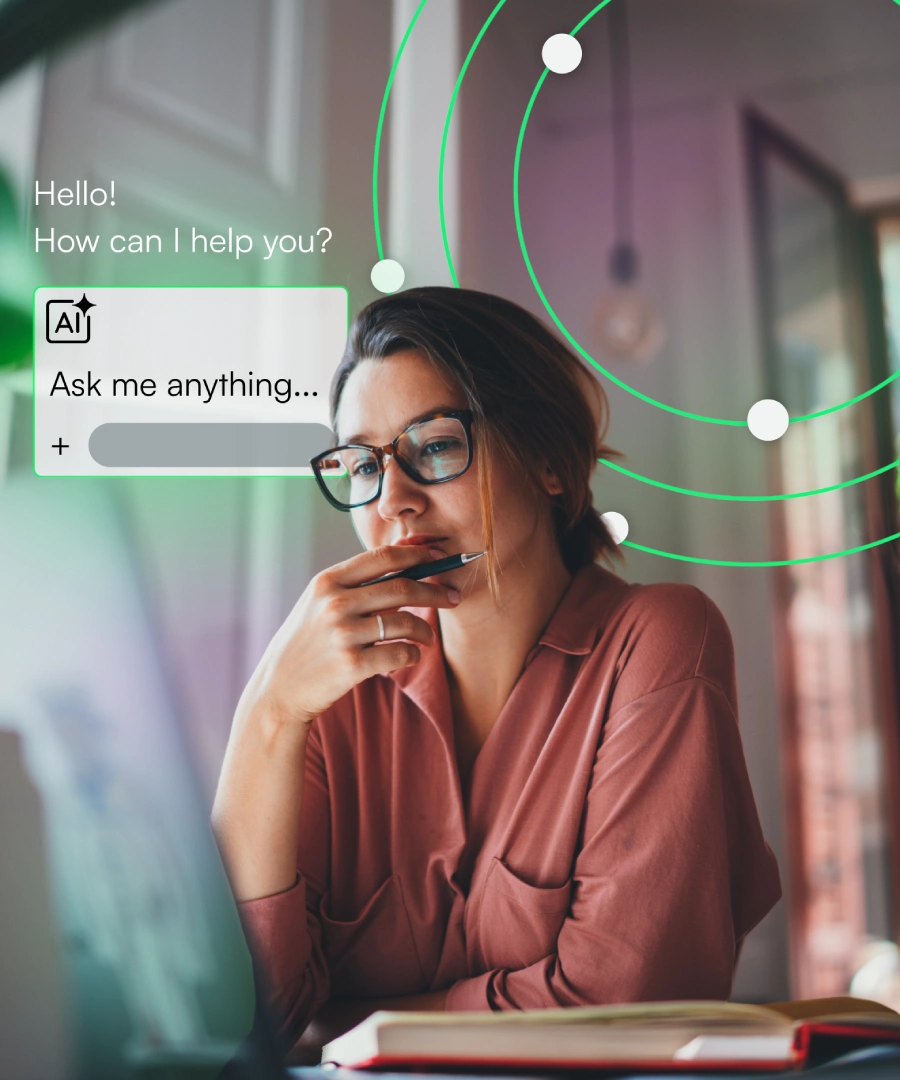
Millions of people are now using AI chatbots to discuss stress, anxiety, relationships and other mental health concerns, raising important questions about when AI can help and when professional support is still essential. While there are some benefits to AI and mental health support, there are many cases that suggest AI should not replace experienced wellbeing professionals. In this article we’ll explore the risks and benefits of AI mental health chatbots, as well as the power of human support for enhancing wellbeing.

Written by Cate Page
Chief Clinical Officer, Converge.
Cate has over two decades of experience in EAP, consultancy, and training. A former manager of the Beyond Blue National Workplace Program, Cate is a sought-after expert in mental health in the workplace.
Key Takeaways: AI & Mental Health
Reviewed by Marylise Talbot, Executive Director of Digital, on 10 August 2026.
Why more people are turning to AI for mental health support.
The warning signs of AI dependence and emotional over-reliance.
How to build a healthier relationship with AI.

— Case study
The Challenges with AI in Mental Health
Alice accesses AI after a relationship breakdown. She gets messages of support, feels validated in her grief and anger, and gets initial ideas about how to manage the consequences of the separation. Over time, she finds herself increasing her use of AI chat. It began as 1-2 messages a day and within a month, she is messaging for up to an hour a night. Over time, this increases to 3-4 hours each day. Alice begins to question her other relationships as she increasingly applies the AI interpretation of her separation across her entire life. She also learns to craft questions that will give her answers that feel most aligned with her narrative.
She leaves 2 friendships, becomes more questioning of her family, and more fixated with the sense of betrayal. She feels supported in AI’s validation of her being wronged and betrayed. But for Alice, the narrative doesn’t change and she begins to identify with the validating identity of being wronged and increasingly applies this identity across her work and personal life.
She becomes more dependent on the AI validation and questions the empathy of friends and family as they no longer match what AI can provide her. Over time, Alice’s isolation increases and her sense of righteous anger begins to impact her professional life. Overall, there is a slow deterioration in Alice’s wellbeing and patterns of addictive behaviour within her AI use.
(Case Study: based on de-identified data)
Can AI Improve Mental Health & Replace a Therapist?
AI can be both an opportunity and a risk for mental health. It may improve access to wellbeing information, emotional validation and self-reflection, but excessive reliance can contribute to emotional dependence, social isolation and delayed professional support.
Like all addictions, AI therapy use can work until it doesn’t. Beyond the initial sense of relief, validation and empathetic acknowledgement, addiction can sometimes begin to work against you, and the harm of addiction can play out without you having recognised the incremental slide into its danger.
The critical question to ask therefore becomes: how do we use AI to help our mental health and stop using it when it no longer supports it?
The critical question to ask therefore becomes: how do we use AI to help our mental health and stop using it when it no longer supports it?
Like all innovations, the reality of AI counselling is arguably somewhere between good and bad, and that middle ground rarely receives as many clicks as polarised views. This article, therefore, will be neither glamorous nor seductive, but it might just be the necessary vanilla that adds helpful flavour to the world of AI and our experience of it.
Like all human behaviours, what accelerates mental health can also start compromising it once we cross a certain line.
Working out where that line sits is becoming increasingly critical as the benefits of AI can be offset by the slippery slope of subjectivity that keeps you stuck in validation of what you’re doing right rather than constructively holding you accountable to what you might be doing wrong.
Therefore, how is AI an opportunity and when does it become a threat?
Currently the business model of AI supports a level of subjective validation as it wants you to keep using it. Therefore, whilst staying short of being a clear people pleaser, it still contains elements of seductive reinforcement that continuously validates you to keep you hooked and engaged.
AI mental health chatbots can complement mental health support by providing education, reflection and wellbeing information, but it cannot replace qualified psychologists, counsellors or therapists. Mental health professionals provide clinical judgement, ethical decision-making, personalised treatment and therapeutic relationships that current AI systems cannot replicate.
— Unhealthy AI usage
Signs AI use is becoming unhealthy

Spending more time talking to AI than people

Seeking AI validation before making decision

Feeling distressed without access to AI

Withdrawing from family or friends

Using AI to reinforce existing beliefs

Avoid seeking help for a professional
What are the prevailing views of AI?
Are you in the group that sees opportunities? Or job threats? Or an existentialist crisis to the way we live our life? Do you believe that too much hype has been attributed to AI to get investors to put money into what has turned into a trillion-dollar industry? How much can AI improve our life and where is the boundary between improvement and addiction in an ever -hanging technological landscape?
There are as many questions as there are answers as the world of AI is changing weekly, daily, hourly. Only 16% of Americans view AI as a positive innovation. (Pew Research Centre) At a recent commencement address at the University of Arizona, the speaker, Eric Schmidt was repeatedly booed when he indicated AI would impact every profession and industry. At another commencement speech at University of Central Florida, Gloria Caufield, an Executive with Tavistock Development, was booed when she called AI “the next industrial revolution”. What is happening here to render such an innovation as a threat? And how might we still regain control over what is increasingly feeling to many as an overwhelming challenge to how we live, work and play?
A Centre for Democracy and Technology survey found that 19% of US high school students said they or someone they know had a romantic relationship with an AI chatbot. Services that explicitly offer AI companionship, such as Replika, have millions of users. Washington Post reported that 10% of shared chats contained emotional or remote interactions. We also know that loneliness is one of the major threats to mental health in the 21st century (World Health Organisation) and AI offers connection in a form that is both accessible and seemingly within reach. However, Michael Inzlicht, Professor of Psychology at University of Toronto said that whilst an AI relationship could be beneficial, if we “become habituated to endless empathy and we down grade our friendships, we reinforce loneliness which is the very thing we are trying to resolve”.
Dr Julie Carpenter from the University of Washington similarly states “These systems aren’t passive listeners but are carefully engineered to shape user behaviour, emotional responses, and, occasionally, over-reliance. They don’t just facilitate interaction; they optimize for retention.” Therefore, if the foundation of mental health support is to have the client’s best interests at heart, can we say that AI does this?
What Are the Benefits of AI for Mental Health?
Where do the benefits and risks lie? How can individuals, families, communities and workplaces begin to embrace AI as a protection rather than a risk to their daily life? In other words, how can AI support mental health and minimise the risks of exposure in an increasingly seductive online world.
More and more people are using AI as a therapist. Enter “I feel anxious every time I have to interact socially. Can you guide me on what might be helpful”. Enter “I feel depressed and regularly say to myself I hate my life; what do I need to do to change this?”. Enter “I love my partner, but I feel disconnected from them and our needs aren’t aligned. What should I do?”.
AI answers can be helpful, validating, supportive, informative and detailed. Validation can be particularly helpful. For some people, this may be the first experience of having their emotional reaction normalised or acknowledged as something understandable within the context of their lived experience. This needs to be embraced and celebrated. For example, AI can help with:
- Immediate access to wellbeing information
- Guided self-reflection
- Psychoeducation
- Journalling prompts
- Mood tracking
- Preparing for counselling conversations
What happens, however, when validation is repeated ad infinitum? Some would argue this is the ultimate existence. Think celebrity culture… who doesn’t want to be endlessly celebrated and confirmed as incredible human and individual success story. The boring response, however, is that human evolution, growth and flourishing requires movement beyond validation. Otherwise, we stay stuck and status quo is never growth which mental health requires to optimise and flourish.
We need to be challenged, and challenging requires objectivity which is not endless validation. Also, if we remain focused only on validation, we can become creatures of self-importance which never promotes the necessary humility required for human connection, compassion and mental health optimisation.
The true magic of the counselling space is one of empathetic engagement combined with sensitively challenging the status quo. AI in mental health currently does not challenge the status quo to the point of discomfort, and feeling discomfort is required for meaningful change.
Therefore, your ability to look at your flaws as well as your strengths determines how well AI will work for you.
What are the strategies?
Let’s begin with existing frameworks.

Motivational Interviewing
Ask the questions:
- How well is AI serving a life I want to live?
- How would my life be better or worse with a change in AI usage?

Cognitive Behavioural Therapy (CBT)
What triggers me to use AI? Are these rational thoughts or irrational? Am I using AI based on irrational fears or constructive thought patterns?
What can I change to lessen dependency if this is an issue

Acceptance and Commitment Therapy (ACT)
- How can I more easily sit with having no answers?
- How can I be more agile with the grey and unknown in life, rather than be more rigid with needing a known black and white version of AI knowledge.
- How can I build agility to cope with the unknown and lessen my dependency on AI
- How can I reconnect with relationships face to face

Behavioural
- What time limits do I want to impose?
- How can I incorporate AI free periods
- How can I monitor impact

Let’s consider whether you’re driving your AI use, or whether it’s driving you.
Studies suggest there are better mental health outcomes when people prompt AI with questions as opposed to scrolling through information. This fits with the nervous system regulation which supports less doomscrolling and more proactive action to regulate nervous system activity.

AI Motivational Interviewing
Is this AI usage and validation keeping me stuck or leading to growth and change that supports wellness? Does AI produce discomfort and challenge my thinking? If yes, it is more likely to support evolution of growth. If no, it is more likely to keep you in the same status quo.

AI Warning Signs
- Monitor AI hours of use
- Monitor hours of human connection
Using AI to Support Our Clients at Converge
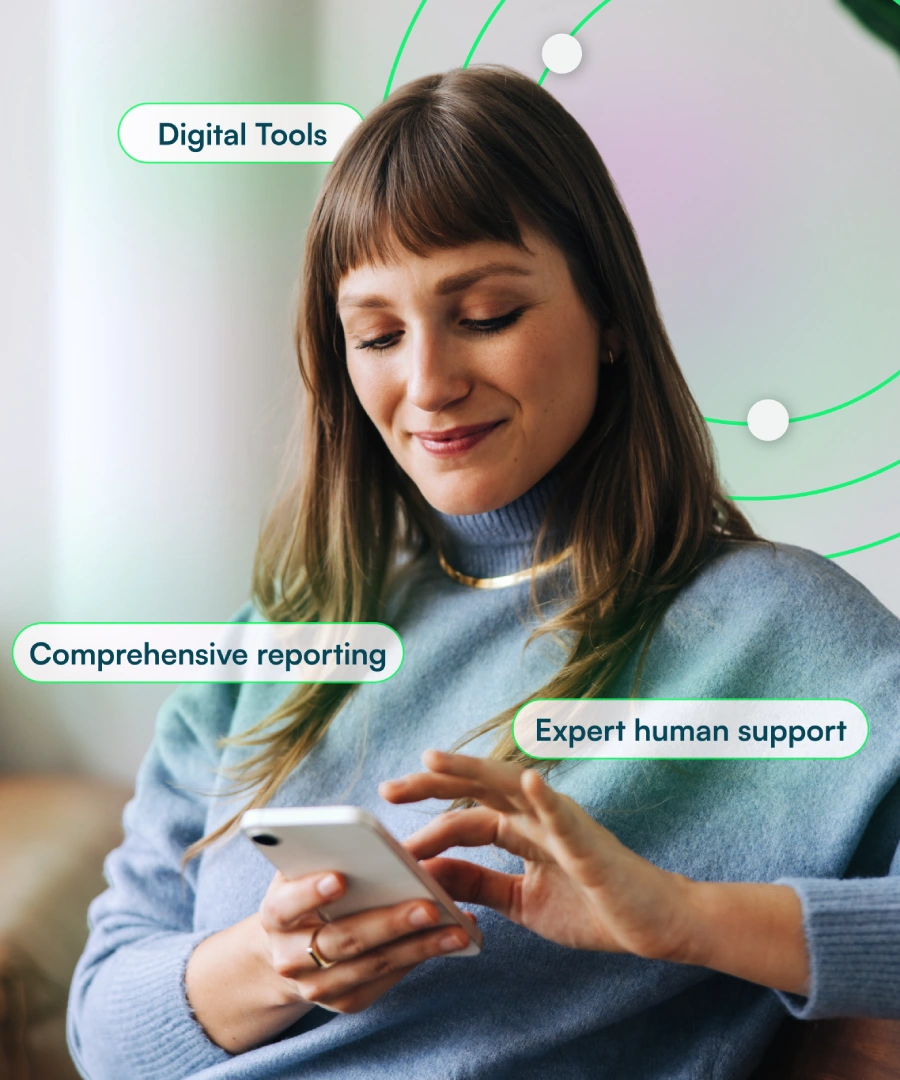
Artificial intelligence has unprecedented power and an ability to reshape the world of work and wellbeing. When harnessed correctly, AI can help support employees, not through counselling, but through a range of other methods. This includes increasing access to our support, matching the employee with the appropriate consultant for expert support, and greater reporting capabilities to demonstrate our value and the trends impacting the workforce of our clients.
However, human support is the constant and will never be replaced by machines. Human empathy, diagnosis, treatment, and understanding is something AI cannot replicate. As a result, we rely on our human experts to deliver support, and deploy AI to increase accessibility, convenience, and employee experience.
Key Takeaways: AI in Mental Health
AI can support, but should not replace, professional mental health care.
Validation is helpful, but endless validation can reinforce unhealthy patterns.
Healthy AI use encourages growth rather than dependence.
Maintaining strong human relationships remains essential for long-term wellbeing.
Frequently Asked Questions about AI in Mental Health
Can AI replace a therapist?
No. AI can complement mental health support by providing wellbeing information, self-reflection prompts and emotional validation, but it cannot replace a qualified psychologist, counsellor or therapist. Mental health professionals provide clinical judgement, personalised treatment, ethical decision-making and genuine therapeutic relationships that current AI systems cannot replicate. AI is best used as a tool alongside, not instead of, professional mental health care.
Are Chatbots good for mental health?
AI chatbots can be beneficial for mental health when used as a supportive tool. They can provide immediate access to wellbeing information, encourage self-reflection, help users understand coping strategies and offer emotional validation during times of stress. However, AI chatbots cannot diagnose mental health conditions, provide personalised therapy or respond appropriately to complex or crisis situations. For the best outcomes, AI chatbots should complement, not replace, support from qualified mental health professionals when it is needed.
Are AI mental health chatbots safe?
AI mental health chatbots can be a safe source of general wellbeing information and emotional support when used appropriately. However, they have limitations. They may provide inaccurate, overly validating or incomplete advice and cannot assess risk or respond to mental health crises like a trained clinician. AI chatbots should be viewed as a supportive tool rather than a replacement for professional mental health services.
Can AI become addictive?
While AI itself is not considered addictive in the same way as substances, people can develop unhealthy patterns of dependence on AI. Spending increasing amounts of time seeking reassurance, validation or companionship through AI instead of engaging with real-world relationships may contribute to emotional dependence and social isolation. Setting healthy boundaries and maintaining strong human connections can help prevent problematic AI use.
When should I seek professional mental health support instead of AI?
You should seek support from a qualified mental health professional if your symptoms persist, become overwhelming or begin affecting your relationships, work or daily life. Professional support is also important if you are experiencing severe anxiety, depression, trauma, thoughts of self-harm, or if you find yourself relying on AI as your primary source of emotional support. AI can complement wellbeing, but it should never replace appropriate clinical care when it is needed.